The Wisdom of Suspension
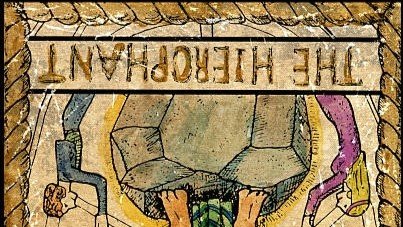
The Hanged Man is one of the easiest tarot cards to use as an excuse, precisely because the excuse sounds like wisdom.
A figure hangs upside down by one foot. His face is calm, a halo surrounds his head, and his body appears almost deliberately arranged. There is no visible struggle and no urgent attempt to escape. The image seems to suggest that he has accepted his position, perhaps even chosen it.
The card is therefore commonly associated with surrender, pause, sacrifice, and a change in perspective. None of these interpretations are wrong. But once this language leaves the card and enters our lives, it can make almost any delay appear spiritually necessary.
We are not avoiding a decision. We are waiting for clarity.
We are not afraid to act. We are trusting the timing.
We are not refusing responsibility. We are allowing things to unfold.
Sometimes this is true. Sometimes fear has simply learned the language of surrender.
We live in a culture that treats constant movement as a virtue. Productivity is mistaken for purpose, decisiveness for strength, and visible progress for proof that a life is going somewhere. To stop can feel like failure. Even rest is expected to prepare us for more work.
The Hanged Man offers a necessary interruption to this logic. He reminds us that action is not always the same as agency. We can act compulsively, not because we know what to do, but because doing something feels less frightening than admitting that we do not know. We can make a decision simply to escape the discomfort of uncertainty. We can force conversations, endings, beginnings, and explanations before we are ready to understand what they mean.
In these moments, stillness is not weakness. It is the refusal to manufacture certainty where none exists.
There are experiences that cannot be solved through greater effort. Grief cannot be made efficient. Desire cannot always be turned into a plan. Some transitions require us to remain for a while in the space between what has ended and what has not yet taken form. Acting too quickly may only recreate the same situation from which we were trying to escape.
This is where the change of perspective traditionally associated with The Hanged Man becomes meaningful. He does not merely look at the same world for a longer period of time. His entire position has been reversed. What once appeared stable is now disorienting. What seemed above is below. The viewpoint from which he previously understood himself can no longer be maintained.
A genuine pause does something similar. It interrupts the assumptions that made our previous actions seem inevitable.
But the opposite of compulsive action is not permanent inaction.

The Hanged Man and the Illusion of Surrender
There is a difference between surrendering control and surrendering responsibility. The first recognizes that we cannot dictate every outcome. The second allows us to pretend that our choices have nothing to do with what happens next.
True surrender does not mean waiting until the universe delivers the result we wanted all along. It includes the possibility that the desired result may never come. It means releasing not only the need to control how something happens, but also the guarantee that it will happen at all.
Spiritual language often disguises this distinction. We say that something will arrive when the time is right, that what is meant for us will find us, or that we are being asked to wait. These beliefs can bring comfort when circumstances really are outside our control. But they can also turn surrender into a transaction: if I wait correctly, patiently, and with enough faith, I will eventually be rewarded with what I want.
That is not surrender. It is control with incense around it.
The Cost of Not Choosing
Waiting can become especially seductive when a decision would require us to lose something. Every real decision closes off other possibilities. To choose one direction is to abandon another. To name a relationship may reveal that it cannot become what we hoped. To leave may mean accepting that the situation will not improve. To publish something exposes it to judgment. To speak honestly risks rejection. To set a boundary may change how another person sees us.
Not deciding appears to preserve all possible futures. Nothing has formally ended, so everything can still be imagined.
But time does not stop because we refuse to choose. Other people continue making decisions. Opportunities disappear. Relationships establish their own patterns. Silence communicates something, even when we insist that we have said nothing.
A non-decision is not the absence of consequences. It is a decision handed over to time, circumstance, or someone else.
This is why The Hanged Man can be such a comforting card in readings. It seems to offer permission not to know yet. Sometimes that permission is exactly what is needed. But it can also postpone the grief contained within an answer we already suspect.
The card may describe suspension without prescribing that we remain suspended.
Someone may repeatedly ask tarot whether a relationship will develop while avoiding the conversation that would make the situation clearer. Someone else may continue preparing a creative project because preparation protects them from the vulnerability of completing it. We may claim that we need more information when what we actually want is information that will remove all risk from the decision.
That information rarely exists.
Clarity is often imagined as a state in which choice no longer feels frightening. But many important decisions remain frightening even when they are right. Sometimes clarity does not arrive before action. It is produced by action.
Not Everyone Chooses the Rope
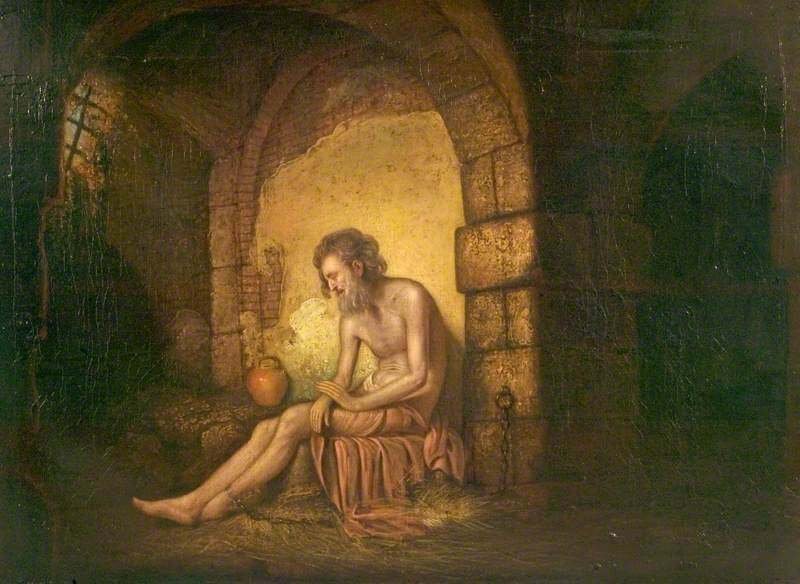
At the same time, not every inability to act should be moralized as avoidance. A person may be immobilized by depression, exhaustion, illness, financial dependence, caregiving, trauma, or circumstances that sharply limit their available choices. Telling someone in such a position that they simply need to be brave and take action can be cruel.
Romanticizing their paralysis as a spiritual lesson can be equally cruel.
The calm expression of The Hanged Man encourages us to imagine that his suspension is voluntary. Yet the image itself does not fully answer that question. We project meaning onto his stillness. We call it sacrifice, enlightenment, or acceptance because the alternative – that he cannot free himself – is much more disturbing.
Not everyone who is hanging has chosen the rope. Not everyone needs to learn how to surrender. Some people need a way down.
Refusal as a Form of Action
In such cases, the question is not, “Why am I refusing to act?” but, “What action is actually available to me?”.
Agency does not always look like a dramatic escape. It may consist of a small refusal, a request for help, the preservation of energy, or the decision not to cooperate with a demand that has become unbearable.
Refusal itself can be a form of action.
To stop producing, explaining, pleasing, responding, or performing may interrupt a system that depends on our automatic participation. A refusal can expose the pressure hidden inside what previously appeared normal. It can create the distance necessary to see that an obligation was never freely chosen.
But meaningful refusal has an object. It knows, at least partially, what it is refusing and why. It also accepts that refusal may have a cost.
Avoidance wants the benefits of saying no without ever having to say no.
What Is the Pause Doing?
This is perhaps the most useful distinction The Hanged Man can reveal.
Is the pause changing our relationship to the situation, or is it merely protecting us from its consequences?
Has something genuinely become visible from this new angle, or are we repeating the same thoughts while calling repetition contemplation?
Are we allowing an old understanding to fall apart, or waiting for it to become comfortable again?
A pause does not have to end in the action we originally expected. Sometimes the new perspective reveals that no intervention is needed. Sometimes it shows that the problem was created by our belief that everything required an immediate response. But even then, something has changed. The decision not to act becomes conscious rather than indefinite. It is no longer a state we have fallen into without admitting it.
The Hanged Man is followed in the Major Arcana by Death. The sequence matters. Suspension is not presented as a permanent home. The change of perspective eventually requires the loss of something: an attachment, an identity, an expectation, or a way of understanding the situation.
The Hanged Man is not a waiting room in which we remain until life agrees to continue according to our previous plans.
If the suspension protects every old hope, it has probably not transformed us. If we emerge wanting exactly the same thing in exactly the same way, only more exhausted from waiting, the halo may have been little more than decoration around our avoidance.
Perhaps the difference between surrender and procrastination can never be measured from the outside. Both may look like stillness. Both may involve uncertainty. Both may last longer than other people find reasonable.
What Are We Refusing?
The difference lies in what we are asking the pause to do.
Surrender says: I cannot force the outcome, and I am willing to face what follows from that.
Avoidance says: if I do not choose, perhaps I will not have to lose anything.
One releases the fantasy of control. The other quietly preserves it.
When The Hanged Man appears, the most useful question may not be whether we should act or wait. It may be: what exactly are we refusing?
We may be refusing the demand to act before we understand. We may be refusing a role, an expectation, or a system that survives through our compliance. But we may also be refusing grief, responsibility, rejection, or the fact that no decision will allow us to keep every possible future.
The Hanged Man does not glorify doing nothing. He asks what remains when our usual methods of control no longer work.
Sometimes the answer is patience. Sometimes it is acceptance. Sometimes it is an honest refusal.
And sometimes, finally, it is a decision.