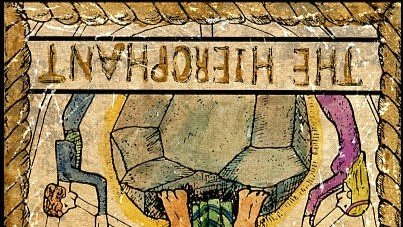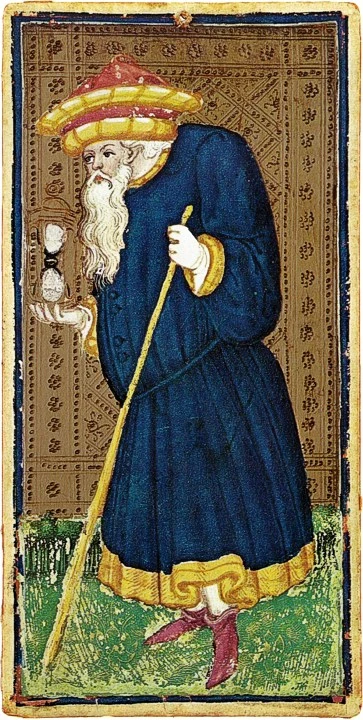
Can something be psychologically true even if it is not literally true? Tarot symbolism has long been understood as a tool of divination, yet its deepest value may lie elsewhere. Through symbolism, projection, and imagination, tarot becomes a mirror that reveals patterns of the psyche rather than fixed predictions about the future.
On Tarot, Deception and Symbolic Truth
Tarot is often seen as a means of prophecy, guidance or mystical awareness – the reader and the seeker, often want to know about the future and the answers to current events.
Skeptics call this nothing but superstitions or traits of self-delusion, and wonder how cardboard pictures could give anything true. Yet it is not the truth in it that is important. The Tarot has the power to reflect the mind, to make self conscious, and to show tendencies of thought, emotion and desire.
In other words, it works, whatever you choose to believe. It is irrelevant if it’s because it discovers facts or because it gives an opportunity for self-examination and communication with the subconscious or imaginative life.
In this essay I am writing about it as a means of divination or projection and psychological stimulation, using psychoanalysis, psychology and critical thinking for guidance.
The Mirror and Misrecognition: Lacan
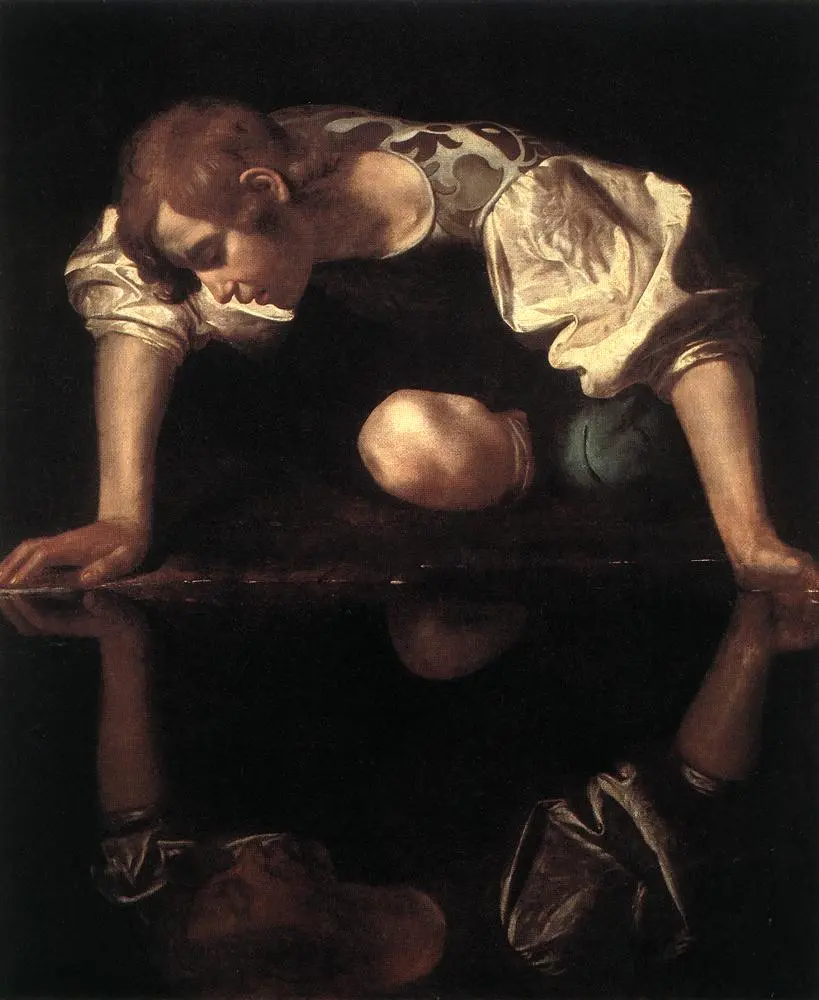
Lacan’s Mirror Stage is a very good model to apply to Tarot from this perspective. The infant sees its own image reflected back at it, and thus has a self-confirmation and self-misconception at the same time. In other words, the infant identifies with a self-image which is both coherent, yet always created from a symbolic representation.
Tarot can function similarly to a mirror that reflects the querents’ internal worlds: to show them their desires, fears and their conceptions of themselves. Tarots cards evoke recognition and reflective responses from the querent.
This mirroring process is exactly what makes Tarot useful. By revealing idealized or misrepresentative representations of the self to the querent, we gain knowledge about the patterns of our unconscious that may have been hidden otherwise.
In the manner that our Ego forms (our identification), the same dynamic can be used in Divination. We look for ourselves within symbolic surfaces, but what is important is the dialogue initiated.
Archetypes and the Shadow – Projection as Insight: Jung
Jung’s archetypes and shadow are helpful in understanding how tarot functions. Archetypes are common to all humans as a pattern of thought or behavior; the archetypes found in tarot images include the Fool, the High Priestess and the Tower. Tarot shows us our shadow – the parts of ourselves that we do not acknowledge – the querent sees their shadow in the reading when they project their unconscious thoughts on to the cards. By doing so, the querent can externalize their internal struggles and gain insight.
Projection is not simply an issue of misperception. Projection is a method of revealing the unconscious, and for many people, the use of tarot cards provides a means of making the unconscious visible. What you read into the cards is what you are unwilling to accept about yourself. Therefore, tarot “lies” much the same way that the psyche lies – by using symbolism to disguise the truth and by filtering honesty through imagery.
When someone views their reading as “fate,” it may actually be their own long-forgotten desires. When someone sees their reading as a “warning,” it could simply be their own reluctance to act. While tarot readings do provide insight into one’s life, the importance of the process is not simply revelatory because the cards show one’s true circumstances – it is revelatory because tarot makes aware of the unconscious content of the querent’s mind.
This is why Tarot functions as it does. It shows us our projected unconscious thoughts and behaviors – and by confronting those issues, individuals become able to understand the shadow and certain patterns of behavior.
Individuals who have used tarot for self-discovery have reported gaining greater self-awareness and being better equipped to make conscious choices.
Image-Work and Psychological Play: Hillman
James Hillman’s viewpoint conceptualizes psychology as the study of images. Tarot is thus a kind of image-work. Each card is a stimulus that evokes thoughts, stories and imagery. The validity of the reading is irrelevant; what counts is whether it allows the querent to engage with the self. The cards are instruments for a psychological dialogue through which the seeker can explore emotional habits, moral dilemmas and personal stories in visible, though symbolic, form. Thus, tarot is a technique of self-study.
Fantasy, Desire and Ideology: Žižek
The ways in which humans interpret the world, through ideologies and desires (or fantasies), are demonstrated by Slavoj Žižek. Tarot readings, in that context, appear to be meaningful for individuals because they have invested their hopes, fears, and dreams into the meanings of the cards. Here, self-deception is a natural part of human consciousness. Humans create stories about the world around them to both protect themselves from reality and support their way of life.
Tarot represents this phenomenon: the cards here serve as a platform on which the psyche plays out its own internal dramas. A querent may unconsciously direct the reading toward confirming a fantasy or alleviating an anxiety; however, the process of lying to oneself can still produce truth – specifically, truth regarding the nature of one’s desires rather than about the external world. The cards also provide a safe environment for the psyche to play out fantasies, come face-to-face with contradictions, and investigate unexplored conflicts within itself.
What ultimately matters here is the process of reflection and interpretation. As such, the literal truth of the tarot is less important than the process of interpreting oneself.
The Aura of Meaning: Benjamin
Walter Benjamin’s thoughts on aura and art are also relevant. The ceremonial performance, visual richness, and symbolic language of Tarot serve to create a sense of meaning and truth. This aura invites further engagement in a way that relates to the querent’s own reflective capacity.
This experience may in a literal sense be illusory, but becomes psychologically and emotionally real in being a site of reflection, insight, and meaning-making.
Tarot works because the aesthetic and symbolic aspects of it encourage immersion, attention, and active interpretation.
Astrology, Ritual, and the Shared Logic of Symbolic Practice
That dynimic isn’t exclusive to tarot. Astrology, ritual and other symbolic practices work on the same principle: they don’t have to rely on empirical proof but on their power to shape experience that provoke reflection and generate meaning through active participation.
This symbolic approach also appears in astrology. In Chiron in Myth and Astrology: Understanding the Wounded Healer, I explore how myth functions not as literal history but as a symbolic language through which suffering, healing, and transformation become psychologically meaningful.
Astrology can convert the moving of the heavens into a vocabulary helping people discern the recurring patterns and cycles that unfold in their lives. Rituals, similarly, fashion transformation and intention, in form enlisting the body and imagination in practices that turn the unseen into an experience.
A similar principle can also be found in biblical thought. In To Know or To Be Known: The Erotic of Biblical Knowing, I examine the Hebrew concept of yadaʿ, where knowledge is understood not as detached information but as participation, relationship, and embodied encounter.
These practices don’t have to rely exclusively on facts; they can work because they stitch together the psyche’s ongoing dialogue with existence. Their symbolic structure allows people to make sense of change, uncertainty, and desire. They offer coherence – and that coherence itself is healing.
The Paradox of Truth and Utility
The value of Tarot is not in if it “tells” us about the world around us but how it can stimulate our minds and imaginations. What we see in Tarot Cards does not have to be literally true in order to be useful. In fact, the more we use Tarot the less concerned we will become with whether the actual events that happen are related to the predictions made by the Cards. The Cards allow us to look at ourselves, at our desires, and at how we understand ourselves in a way that our day-to-day awareness simply cannot. This is why Tarot can be such an effective tool in helping us to reflect on our lives, when used as a means of psychological and imaginative expression.
Tarot Symbolism – Where Illusion Becomes Insight
Tarot’s true worth doesn’t necessarily depend upon does it represents an objective world, but in providing insight into one’s own mind; stimulating the psyche through revelation, evocation, and even deception.
With reference to these thinkers, Tarot can be thought of as a symbolic representation (mirror) or as a tool for projecting (projection surface), and ultimately, a means for working with images (image-work). As such, tarot can represent things that are false, distorted, and misleading – and yet, by being all these things, it reveals. Because the value of tarot lies not just in revealing the future, but rather also in the use of the imagination to elicit reflection and provide insights into the self.
The reflection provoked by the lying mirror can still be deeply significant.