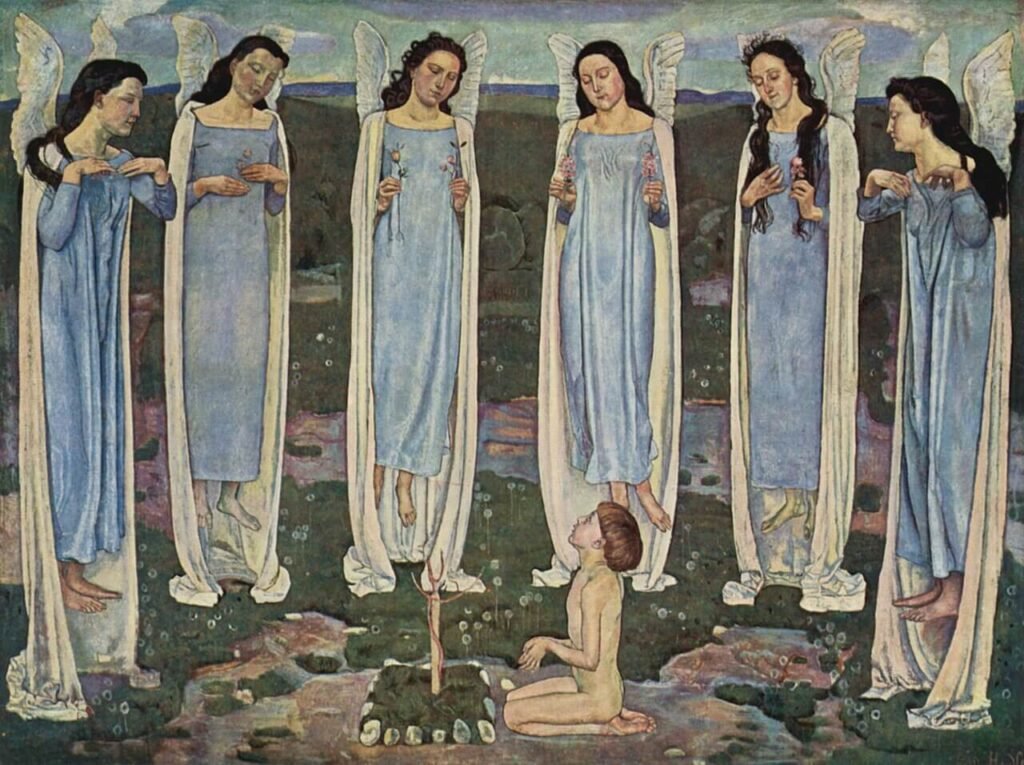
Ferdinand Hodler, The Chosen One (Der Auserwählte), 1893–1894. Oil and tempera on canvas. Kunstmuseum Bern, Switzerland. Public domain
There is a particular comfort in the idea of being chosen for something.
An ambition becomes a calling. A difficult period acquires a place in a greater story. Experiences that once seemed disconnected begin to look like preparation. Somewhere beneath the uncertainty, there is a purpose waiting to become clear.
Such a belief can sustain courage, patience, and commitment. It can help someone take seriously a responsibility they would otherwise avoid.
The feeling of being called deserves more consideration than a quick dismissal as vanity.
But a calling can also become a credential.
Somewhere between believing that there is something we need to do and believing that our purpose entitles us to special treatment, the ethical character of the story changes.
We begin to ask less about what our commitments require and more about what our special status permits.
The trouble with being chosen begins when a sense of purpose grants us authority over people who never agreed to live inside our story.
The Need for Personal Significance
The appeal of chosenness reaches beyond religion. It offers an answer to the fear that our lives might pass without being noticed, understood, or needed.
To be chosen suggests that someone, or something, has seen us. Even the parts of ourselves we struggle to explain may belong to a design greater than our present understanding.
Someone who has felt expendable may find relief in the thought that their existence carries particular significance.
Yet particular significance can quietly become comparative importance.
We begin with the hope that our lives matter and arrive at the conviction that they matter more.
Other people retain their dignity in principle, while our needs take precedence in practice. Their time, objections, and disappointments become secondary to the work we believe we have been sent to do.
This shift can happen without an explicit declaration of superiority. It may appear as a sincere conviction that people will understand later, once the greater purpose has been fulfilled.
Meanwhile, they are expected to absorb the consequences.
Being Chosen and Accountability
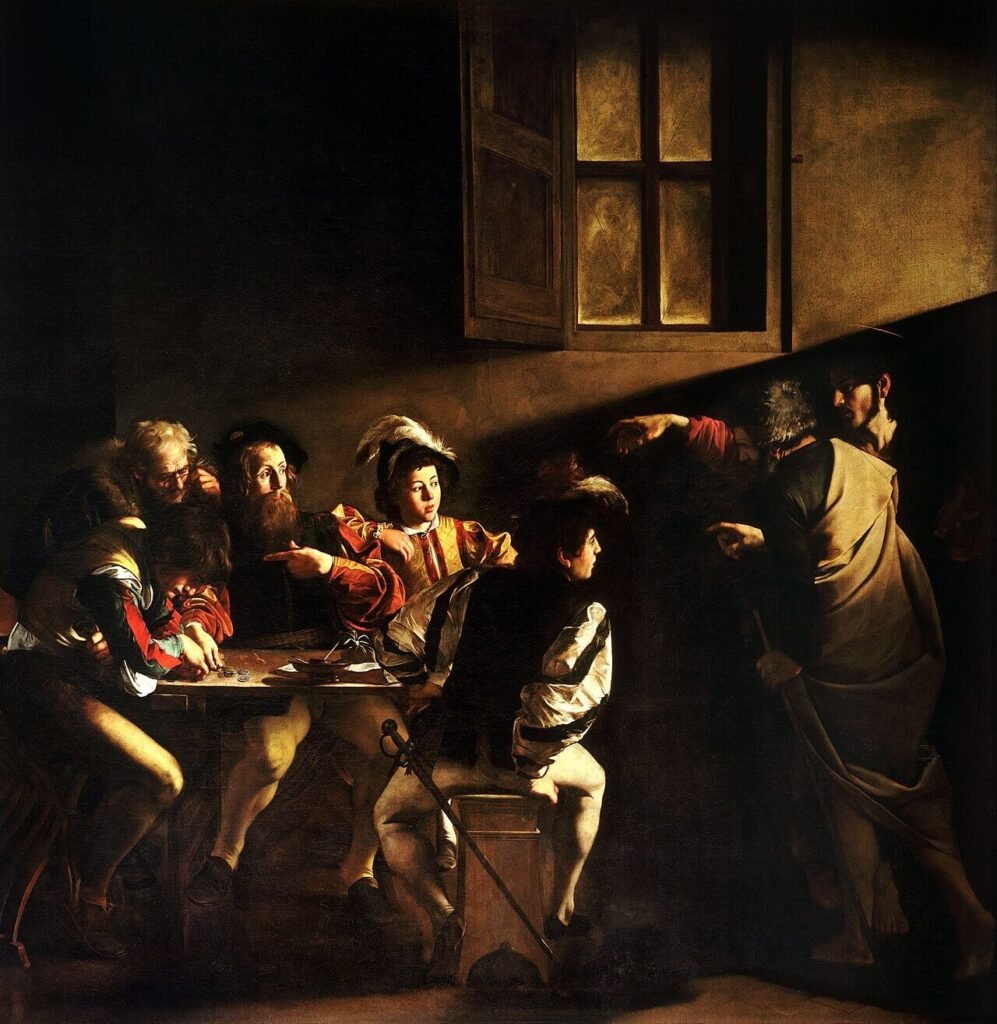
Caravaggio, The Calling of Saint Matthew, 1599–1600. Oil on canvas. Contarelli Chapel, San Luigi dei Francesi, Rome. Public domain
Religious election, an individual’s vocation and contemporary stories of personal destiny have different meanings.
A covenant involving people cannot simply be reduced to someone’s feeling of being cosmically exceptional.
Still, biblical texts offer a sharp challenge to the assumption that a special relationship with the divine grants immunity.
In Amos 3:2, God’s declaration that Israel has been singled out leads directly to a reckoning for its wrongdoing. Still the relationship itself becomes the reason for accountability. Read this way, election intensifies the demand to answer for one’s actions.
Luke 12:48 similarly connects what has been entrusted to someone with what can be required of them. Its setting matters: the preceding passage describes a steward responsible for a household who begins abusing the people in his care. The warning concerns the misuse of entrusted authority.
These passages do not settle every theological question about chosenness. They do make a comfortable interpretation harder to maintain.
For an ethical understanding of vocation, receiving a task must leave us answerable for how we carry it out.
The language of grace becomes strained when we treat a gift as evidence of our superior worth.
When Calling Becomes Entitlement
The dangerous turn occurs when a claim about purpose becomes permission to disregard another person’s freedom.
A spiritual teacher may believe their insight places them beyond ordinary scrutiny.
Someone may interpret a relationship as destined and treat the other person’s reluctance as an obstacle to overcome.
A leader may insist that the importance of a mission justifies conduct their followers would never be allowed to attempt.
In each case, private certainty creates obligations for other people. They are asked to trust, wait, forgive, or comply because someone else claims access to a greater meaning.
A relationship described as sacred still involves another person’s consent.
A teacher who claims unusual insight still owes students honesty.
A mission with a worthy aim still has to account for the harm done in pursuing it.
Belief in a higher purpose cannot make those questions disappear.
A calling may require resistance to an unjust law, a discriminatory tradition, or a demand for obedience.
Ethical responsibility sometimes involves refusing established rules. But the refusal needs a justification that takes seriously the lives of those affected.
The conviction that we are special does not provide that justification by itself.
One useful question concerns who carries the cost.
When our destiny requires everyone around us to surrender their boundaries while we retain our authority, the arrangement deserves examination.
The Cost of an Unquestioned Calling
A narrative of chosenness can become remarkably difficult to question because every outcome can be absorbed into it.
Success confirms divine favour.
Failure becomes a test.
Opposition proves that the world is threatened by the mission.
Loneliness demonstrates how few people can understand it.
An unanswered prayer becomes evidence that the answer is being withheld for a greater purpose.
Each interpretation may be possible within a person’s faith. The difficulty arises when interpretation becomes automatic, leaving no room for an event to challenge the story we have told about ourselves.
Someone can face real persecution. A worthwhile commitment can involve failure and isolation.
Yet resistance alone cannot establish the truth of a calling. Being misunderstood tells us that understanding has broken down; it does not, by itself, tell us who is right.
Discernment requires room for correction. We need to be able to consider that we misunderstood an experience, confused desire with obligation, or attached a cosmic explanation to something we wanted very badly.
A commitment can remain serious while its interpretation changes.
Suffering is particularly vulnerable to this kind of interpretation.
A story of chosenness can help someone survive pain by making a future imaginable. But it can also create pressure to redeem every wound through a mission, as though suffering needs to produce something extraordinary before it can be acknowledged as real.
Finding meaning after harm leaves room for a survivor’s agency.
Declaring that the harm was necessary for their destiny imposes an explanation they may never have chosen. Their pain deserves care even if it yields no lesson, calling, or transformation.
Responsibility Without Self-Erasure
Understanding chosenness through responsibility brings its own danger. The promise of greater importance can be replaced by a demand for endless sacrifice.

Jules Bastien-Lepage, Joan of Arc, 1879. Oil on canvas. The Metropolitan Museum of Art, New York. Public domain
Someone may come to believe that being called obliges them to remain available, endure mistreatment, or keep giving long after their capacity has been exhausted.
The special status disappears, but the exceptional rules remain: everyone else is permitted limits, while the chosen person must transcend theirs.
An ethical account of responsibility needs to include actual power, relationships and capacity.
Someone entrusted with authority has obligations arising from the influence they possess. A person who can offer help may have a particular task before them. Neither situation turns them into an unlimited resource.
Nor does calling place a spiritual gloss over exploitation.
A community that praises someone’s vocation while ignoring their exhaustion may be benefiting from precisely the sacrifice it has taught them to consider sacred.
Responsibility includes recognising where our competence ends, sharing work, accepting help, and acknowledging that other people have contributions of their own.
A sense of purpose becomes dangerous when it makes us believe everything depends on us. The inability to step aside can express attachment to our importance as easily as devotion to a task.
A Calling Without a Throne

Hans Holbein the Younger, The Ambassadors, 1533. Oil on oak. The National Gallery, London. Public domain
Can being chosen mean greater responsibility without a promise of greater importance?
It can, if we understand responsibility through the particular demands of a relationship or task.
What has been entrusted to someone can increase what they owe. It need not increase the value of their life relative to anyone else’s.
We already recognise this distinction in ordinary situations.
Caring for a child creates specific obligations. Holding authority creates duties toward those affected by it. Having knowledge can make us responsible for how we use it. The additional responsibility comes from the situation, while the people involved retain equal dignity.
Understood this way, a calling directs our attention toward what needs doing and whom it concerns.
It may draw us into work that matters deeply without promising recognition, certainty, or an exceptional place in history.
Its seriousness becomes visible through the care we take with it, including our willingness to hear that we have caused harm.
There is also room to ask whether we need the language of chosenness at all. A task can deserve our commitment before we have an explanation for why it has become ours.
Love can make a claim on us without providing evidence of cosmic selection.
Our lives retain their worth when a calling changes, when a project fails, or when we discover that someone else is better able to continue the work. We do not have to justify our existence by making ourselves indispensable.
Perhaps the most demanding possibility is to take our purpose seriously while remaining open to correction, limits, and the full reality of other people’s lives.
Whatever has called us, the people we encounter are not supporting characters.