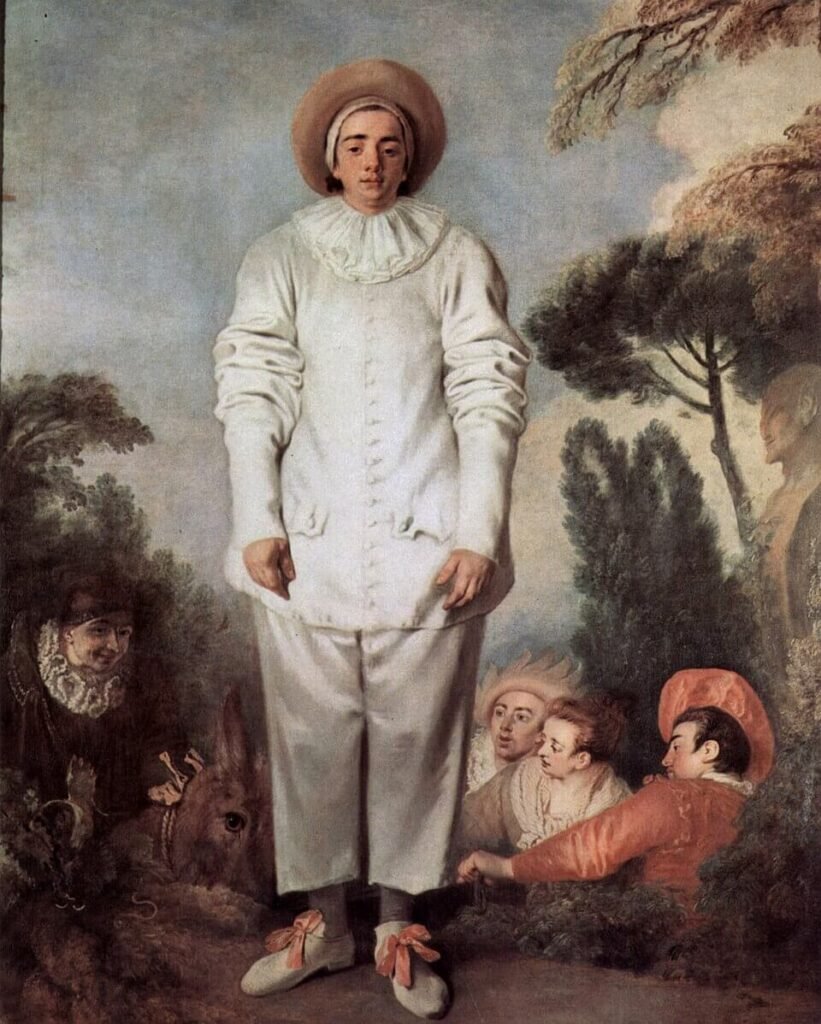
Jean-Antoine Watteau, Pierrot (c. 1718–1719), oil on canvas. Musée du Louvre, Paris
There is a peculiar kind of unease in behaving unlike the person your chart has taught you to expect.
You want reassurance, although you have learned to describe yourself as fiercely independent.
You enjoy an uneventful relationship, despite having acquired an elaborate vocabulary for your supposed need for intensity.
You discover that something you once called essential to your nature no longer resonates with you.
These experiences might deserve attention in their own right. Instead, you begin looking for the placement that will explain the discrepancy.
Perhaps another part of the chart accounts for it.
Perhaps you are repressing something.
Perhaps you have not yet learned to embody your potential.
The possibility that the description needs revising can become strangely difficult to consider.
Astrology and identity can become closely intertwined. A birth chart offers a language through which to recognize ourselves. But recognition can gradually become an expectation.
We learn what kind of person we are, then begin treating that person as someone we have to remain.
Astrology and Identity: From Recognition to Expectation
A useful description often begins with relief.
Someone gives language to a tension you have struggled to articulate: the desire for closeness alongside the fear of dependence, the impulse to act alongside the need to control the outcome.
Experiences that seemed unrelated acquire a pattern. You feel less arbitrary to yourself.
That relief deserves to be taken seriously. A symbolic framework can make reflection possible where there was previously only confusion or self-reproach.
The shift occurs when a description starts determining what counts as a legitimate response.
“I often withdraw when I feel overwhelmed” becomes “I am someone who needs distance”. Eventually, asking for company feels like a failure to understand yourself. “I have difficulty with uncertainty” becomes a reason to preserve control in circumstances where control is damaging your relationships.
The language remains descriptive, but it has begun issuing instructions.
This can happen with flattering interpretations as easily as with difficult ones.
Being told that you are naturally nurturing may make it harder to admit that you do not want to take care of someone. Being described as unusually resilient may leave you feeling that ordinary exhaustion requires an explanation.
The chart has become an assignment when certain feelings seem permissible only after you have found astrological authorization for them.
The Life You Leave Out
Once an interpretation becomes central to your identity, some experiences fit more comfortably into the story than others.
If you understand yourself as emotionally intense, periods of calm may feel like intervals between more authentic experiences. If independence is your defining quality, the moments when you need other people can be treated as temporary lapses. You may remember every occasion on which you resisted authority while overlooking the many ways you accommodate it.
No deliberate dishonesty is required.
A familiar account of yourself gives you something to notice, repeat and remember. This can resemble confirmation bias: giving more importance to experiences that support a familiar account of ourselves.
Astrological fluency can make this process especially difficult to interrupt.
A chart contains enough complexity for a discrepancy to prompt further interpretation: another placement, an aspect, a house, a transit. Sometimes that produces a more careful reading. Sometimes it allows the original account to survive without being reconsidered.
The relevant question is what happens to the experience itself.
Does it change your understanding, or does it disappear into an explanation that leaves everything as it was?
If tenderness is always a hidden expression of your severity, and hesitation is always another manifestation of your courage, the interpretation may have become very good at preserving itself.
You can explain more and more while allowing yourself to discover less and less.
When the Role Becomes Rewarding

James Ensor, Self-Portrait with Masks (1899), oil on canvas. Menard Art Museum, Komaki, Japan
Performing a chart need not involve pretending to feel something you do not feel. It can mean learning which parts of yourself receive recognition, then giving those parts more space.
There may be an audience. Friends expect your bluntness because you are “the fiery one”. A partner treats your reserve as an established feature of your nature.
In an astrological community, you become recognizable through a small collection of traits: the disciplined Saturnian, the elusive Neptunian, the person whose relationships are always described as Plutonian.
Those descriptions can become socially useful. They offer a place in the group and a familiar way of being understood.
Behaving differently may then require more than changing a habit; it may mean disappointing people who have learned to enjoy your consistency.
There can also be a private reward. An astrological identity gives ordinary frustrations a coherent story. Difficulty sustaining intimacy becomes part of a compelling personal mythology. Chronic overwork acquires the dignity of a Saturnian vocation.
The experience may be painful, but it is recognizable. Changing it would mean surrendering an explanation that has helped make it bearable.
Sometimes we remain attached to a description because we do not yet know how to speak about ourselves without it. Giving up the role can feel like losing the vocabulary through which we became intelligible.
When the Ideal Self Becomes Another Performance
More sophisticated astrology often encourages people to explore several expressions of the same symbol. This can open possibilities that a rigid stereotype would close.
Yet the language of development can generate expectations of its own.
We may be told that a mature expression of Mars looks like decisive action, that Saturn should become disciplined competence, or that a particular placement carries a potential we are responsible for realizing.
There may be value in these suggestions. The difficulty begins when one version of development becomes the standard against which a life is judged.
Someone with a prominent tenth house may feel obliged to pursue public achievement even when the life they want is quieter. A person whose chart is praised for leadership may struggle to acknowledge that they prefer collaboration, or that they do not enjoy being responsible for a group.
An interpretation can absorb familiar cultural ideals: visibility, productivity, confidence, influence. Those ideals then return to the person as though they were requirements written into the chart.
Even freedom can become a duty. If you have learned that you are meant to be unconventional, choosing stability may feel embarrassingly unoriginal.
Growth needs room for changes whose value was not anticipated by the reading.
Otherwise, becoming yourself amounts to getting better at meeting an interpreter’s expectations.
You Are Living an Interpretation
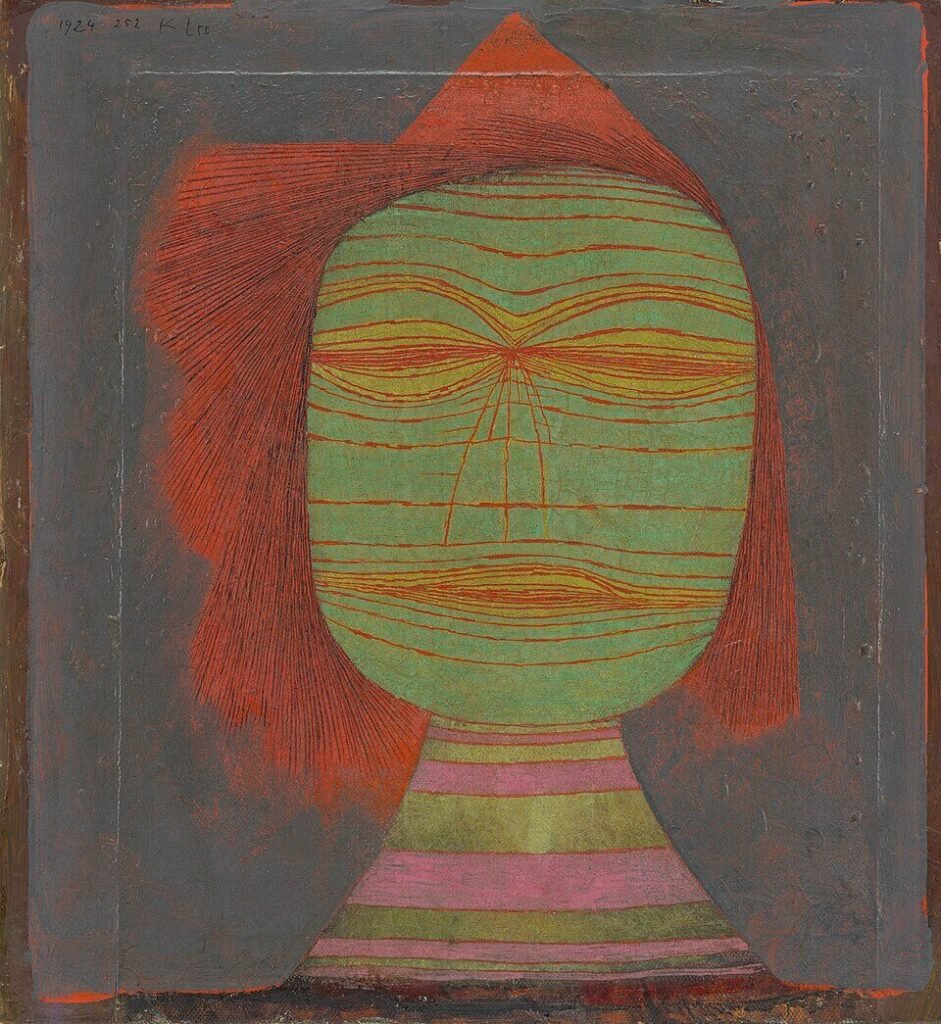
Paul Klee, Actor’s Mask (1924), oil on canvas mounted on board. Museum of Modern Art, New York
When someone says they are “living their chart”, an interpretation is already involved.
Between the birth data and the account of a person stand choices about emphasis, symbolism and meaning. Certain placements receive attention. Others remain in the background.
An astrologer’s assumptions about relationships, ambition, dependence or maturity help determine what becomes significant.
The person reading their own chart makes these choices too.
You may repeatedly return to a difficult aspect because it expresses something you recognize. Over time, it can become the organizing principle of your entire character. Other parts of your life receive less attention because they do not seem to belong to the central story.
This does not make interpretation worthless. It makes interpretation something for which we remain responsible.
The birth data may be fixed. The account built around them can change.
A reading that once helped you understand a recurring problem may eventually become too limiting. Its usefulness at one point in your life does not oblige you to preserve it indefinitely. Nor does every departure require a new astrological explanation before you can take it seriously.
You can want something different before you know where it belongs in the chart. You can observe a change without immediately deciding what it symbolizes.
There is value in allowing an experience to remain unfamiliar long enough to learn something from it.
Becoming Less Recognizable
None of this requires recovering a supposedly pure self untouched by language or influence. We learn about ourselves through descriptions, relationships and the stories available to us.
Astrology is one of the languages through which that learning can happen.
Nor is deliberately experimenting with a symbol necessarily a problem. Someone who has difficulty expressing anger might use Mars as an invitation to practise saying what they want. A person frightened of solitude might find a helpful image in Saturn.
The experiment can offer permission to try something unfamiliar.
Its value depends partly on whether the result is allowed to surprise us.
Perhaps practising assertiveness reveals that you want less conflict in your life. Perhaps spending time alone shows you how much you need companionship. A useful practice lets these discoveries matter, even when they complicate the symbolism that prompted it.
The distinction becomes visible in ordinary choices. You ask for help despite your attachment to being self-sufficient. You decline a responsibility despite having been praised for your competence. You enjoy something simple without making it evidence of a deeper process.
Over time, a reading may help you become more attentive to these moments. It may also tempt you to correct them until you resemble the person you expected to find.
You are allowed to become less recognizable within a description that once felt exact. That change may deserve curiosity before it deserves an explanation.
You do not owe your chart a convincing performance.