Some birth charts seem to arrive at the astrologer’s table already accused.
There is Saturn on an angle, Mars in hard aspect to the Moon, a chain of squares, an opposition between important rulers, perhaps very little obvious support from Venus or Jupiter. Before the person’s life has even been described, a verdict begins to form: this is a difficult birth chart.
Sometimes the person already believes it. They have read enough astrology to recognise the warning signs. They point to Saturn as the reason nothing comes easily, to Mars as the source of every conflict, to the opposition that appears to split their life into incompatible halves. The chart becomes evidence for a suspicion they may have carried for years: that life was designed to be harder for them than for other people.
That suspicion should not be dismissed too quickly. Astrology has always contained symbols of obstruction, conflict, loss and deprivation. Some lives are more burdened than others, and some configurations describe that burden with uncomfortable precision. But the existence of real difficulty does not settle the question of what a difficult chart is.
It only makes the question more important.
Astrology Was Never Entirely Neutral
The distinction between benefic and malefic planets is not a recent misunderstanding invented by anxious people on the internet. In the Tetrabiblos, Ptolemy classifies Venus and Jupiter as benefic, while Saturn and Mars are described as malefic. Squares and oppositions – what are now commonly called hard aspects in astrology – are described as disharmonious. Classical astrological texts often speak bluntly about illness, separation, scarcity, injury and death.
Trying to make every planet and aspect completely neutral may sound compassionate, but it can also flatten both the tradition and the person’s experience.
If someone has lived through prolonged restriction, violence or grief, telling them that Saturn simply means “structure” or that Mars is merely “motivation” can feel absurdly inadequate. Some symbols do describe experiences that are painful, unwanted and costly.
Yet malefic is not the same as morally evil, just as a difficult configuration is not evidence of a defective person. These terms belong to a symbolic grammar of effects. They describe tendencies to delay, deny, sever, inflame, exhaust or bring things into conflict.
Traditional methods do not judge a planet in isolation: its condition, position, relationships and context alter how it can act. No single placement gives the final verdict on an entire life.
A difficult testimony can be present without becoming the meaning of the whole chart.
What Makes a Difficult Birth Chart?
When astrologers describe a chart as easy, there is usually an unspoken picture of the life that ease is meant to produce: stable relationships, productive work, social acceptance, good health, enough money, an agreeable temperament and a coherent sense of self. These things are understandably desirable. But the picture is not culturally neutral. It reflects an ideal of functioning smoothly within the world as it already exists.
Squares and oppositions are difficult partly because they interrupt smoothness. A square creates pressure between needs that cannot be satisfied in the same way. An opposition makes us encounter a polarity that may be divided between self and other, desire and circumstance, one part of life and another. Saturn blocks, postpones and confronts us with limits. Mars cuts, separates and forces an issue. None of these experiences are particularly comfortable.
A person who can tolerate a destructive environment may appear well adjusted to it. A person who cannot may be called difficult.
A strongly placed Mars may create conflict, but conflict may be precisely what establishes a boundary in a family, workplace or relationship organised around compliance. Saturn may signify exclusion by an institution, but it can also describe a refusal to give authority away cheaply. An opposition may feel like an exhausting division, yet it may preserve a contradiction that the surrounding culture would prefer to erase.
This does not make the hardship imaginary. It changes the question. Instead of asking only why a person finds it so difficult to function, we might also ask what they are being asked to function within.
The Productive Saturn
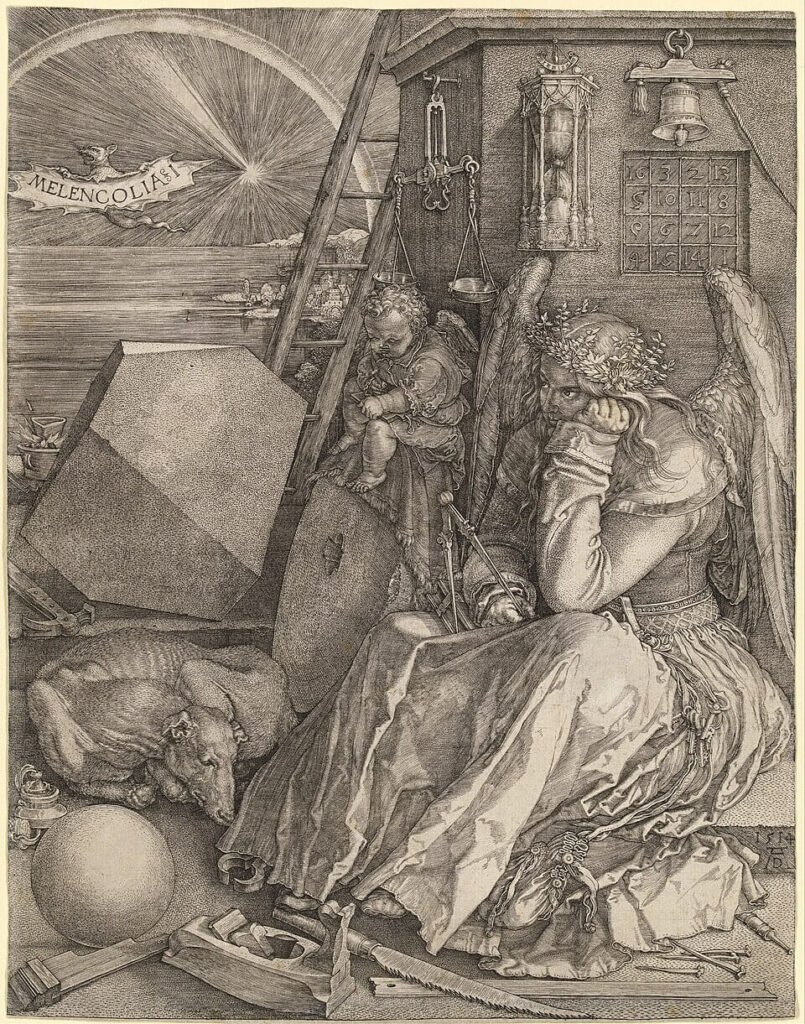
Our culture has a particular affection for Saturn once Saturn becomes useful.
Delay is reframed as discipline. Deprivation becomes ambition. Loneliness becomes self-sufficiency. Relentless pressure becomes a strong work ethic. Astrologers often praise Saturn for the mastery that can be earned slowly and painfully over time, and sometimes that description is entirely true. But it can also make suffering respectable only after it produces something measurable.
The vigilance learned through scarcity may be praised as meticulousness in a career and criticised as rigidity in an intimate relationship. An institution benefits from a person’s endurance while the person pays for it in the body.
“Saturn made you strong” may be accurate. It may also be radically incomplete. The person is allowed to answer: “I should not have had to become this strong”.
Mars is judged just as selectively. It is admired as drive, leadership and competitive instinct when it serves achievement, then condemned as volatility when anger disrupts the expected order.
Social permission is not distributed equally: the same directness can be read as confidence in one person and aggression in another. Refusal becomes courage or insubordination depending on who is refusing whom.
Astrology can easily reproduce these judgments when it treats the chart as the self-contained cause of every problem and ignores the world in which the person has had to live.
Ease Is Not Innocent
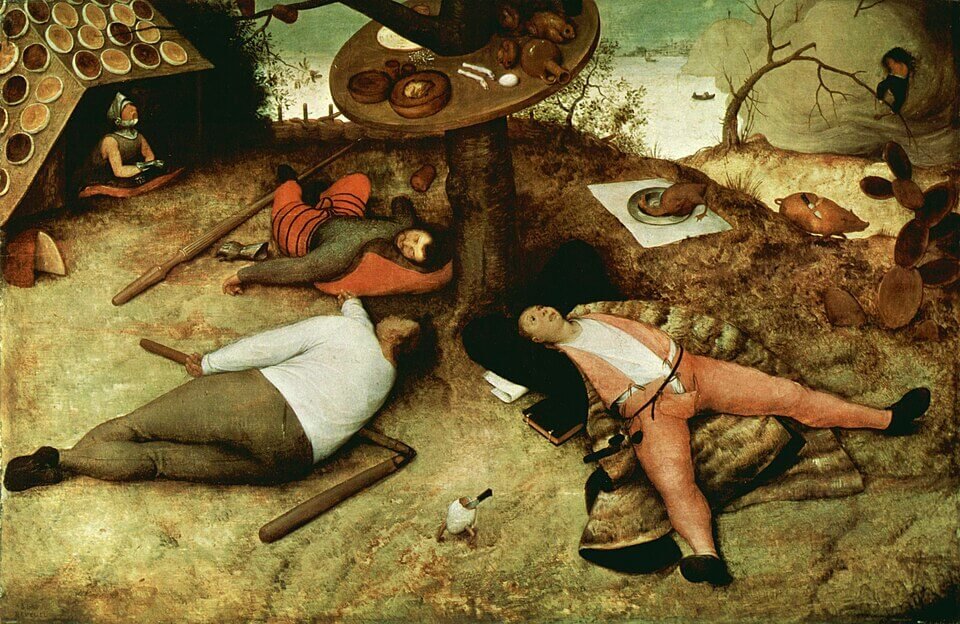
The idea of a difficult chart implies the existence of its opposite: a chart in which energy flows, benefics are well placed and life encounters fewer obvious points of friction. But flow is not the same as goodness.
An easy aspect allows two parts of the chart to cooperate with relatively little internal resistance. It does not decide what that cooperation will be used for.
Venusian ease can create grace, pleasure and connection, but it can also avoid necessary conflict. Jupiter can offer faith and generosity, but it can also amplify certainty and entitlement. Fluency can communicate truth or rationalise almost anything. A person can be perfectly comfortable inside a pattern that harms other people.
Hard aspects often become conscious precisely because they refuse to remain seamless. Their friction demands attention. But even this should not be romanticised: awareness is a possibility, not a guarantee. Some conflicts produce insight; others repeat themselves for years, consume energy or narrow the person’s choices. A square is not automatically a hidden talent waiting to be unlocked.
Ease offers capacity, not virtue. Difficulty creates pressure, not depth. Neither is a moral achievement.
This matters because astrology can quietly turn privilege into goodness and suffering into spiritual authority.
Someone is not kinder because life has been kind to them, nor wiser simply because it has not. A chart may describe the distribution of support and strain, but it does not assign human worth.
No Chart Is Lived in Isolation
Many qualities that appear to be fixed traits are also responses to conditions.
A Moon–Saturn contact may describe emotional self-containment, but self-containment can develop where care has been inconsistent or costly to request.
A sharp Mercury–Mars configuration may signify wit and intellectual force, while also showing a person who learned that hesitation was unsafe.
Venus–Saturn reserve can look like loyalty, caution, fear of rejection or all three at once.
The chart cannot tell that causal story on its own. Yet astrology is often tempted to transform every adaptation into archetypal inevitability. “This is your chart” begins to mean “this is all you are, and this is how you will always be”.
A more useful reading treats the chart as a recurring logic rather than a fixed sentence. The same configuration is lived differently depending on age, material security, relationships, culture, timing and access to support. Support does not erase the chart; it changes the price at which its symbolism is lived.
Mars with room for direct expression may not need a crisis in order to assert itself. Saturn held within reliable structures may not require complete isolation to feel safe. An opposition that has language for both of its sides may no longer need to project one of them onto another person.
A chart can therefore become less difficult without becoming less itself. Conversely, a configuration that once functioned smoothly may become painful when circumstances change. Difficulty is not located only in the natal chart. It emerges in the relationship between a person, a pattern and a world.
Against Astrological Redemption
Modern astrology is often nervous around negative language. Every placement must eventually reveal itself as a gift. Saturn becomes wisdom, Pluto becomes empowerment, Chiron becomes the healer and every square becomes potential.
This is understandable as a response to fatalism. It is also capable of becoming another kind of cruelty: a spiritual bureaucracy in which suffering must prove that it was useful.
Not every loss is an initiation. Not every delay is divine timing. Not every wound produces a strength worth the cost. Sometimes a structure collapses and nothing better is immediately built in its place. Some experiences reduce choice, leave damage and remain difficult even after meaning has been made from them.
An ethical reading should not rush to redeem what happened. There is a difference between meaning created from suffering and meaning assigned in order to justify it. We can recognise what someone made from an experience without claiming that the experience had to occur for that meaning to exist.
Refusing the idea of a bad chart does not require us to declare every configuration secretly good. It means refusing to make a person’s worth dependent on how easily their chart can be converted into a story of growth.
Who Gets the Final Word?
Several voices participate whenever a chart is called difficult.
Tradition provides the symbolic vocabulary and preserves long observation of the conditions under which planets tend to help or harm. Culture supplies less visible standards about productivity, normality, desirability and success. The astrologer selects, combines and narrates the symbols through their own assumptions. The person brings the life that may confirm, complicate or refuse the interpretation.
None of these voices should simply erase the others. Tradition should not be softened until it says nothing. The astrologer should be willing to name conflict, deprivation and pain without disguising them as immediate opportunity. But the person whose life is being interpreted must remain the final authority on whether the description actually resembles their experience.
This changes the questions worth asking.
Not only: How can we turn Saturn into a gift?
But also:
What is genuinely difficult here?
Does the difficulty arise from the configuration itself, from the environment, or from their contact?
What did this adaptation protect, and what does it now cost?
Who benefits from the person’s endurance, restraint or silence?
What kind of support could reduce the harm without erasing the capacity that developed beside it?
The word difficult can still be useful when it is precise.
Saturn may describe delay in a specific area of life. Mars may describe conflict, separation or injury. A square may keep two needs in recurring tension; an opposition may polarise them.
These are meaningful observations. The word becomes dangerous only when a particular strain is turned into a verdict on the chart as a whole.
Astrology does not become kinder by lying about hardship. It becomes kinder by refusing to confuse hardship with defect.
The task is not to rescue a difficult chart with a positive interpretation. It is to read it without punishment: to name where life may hurt, where adaptation has become costly, where genuine capacity has emerged and where no lesson is required.