What happens when knowledge promises not only understanding, but initiation?
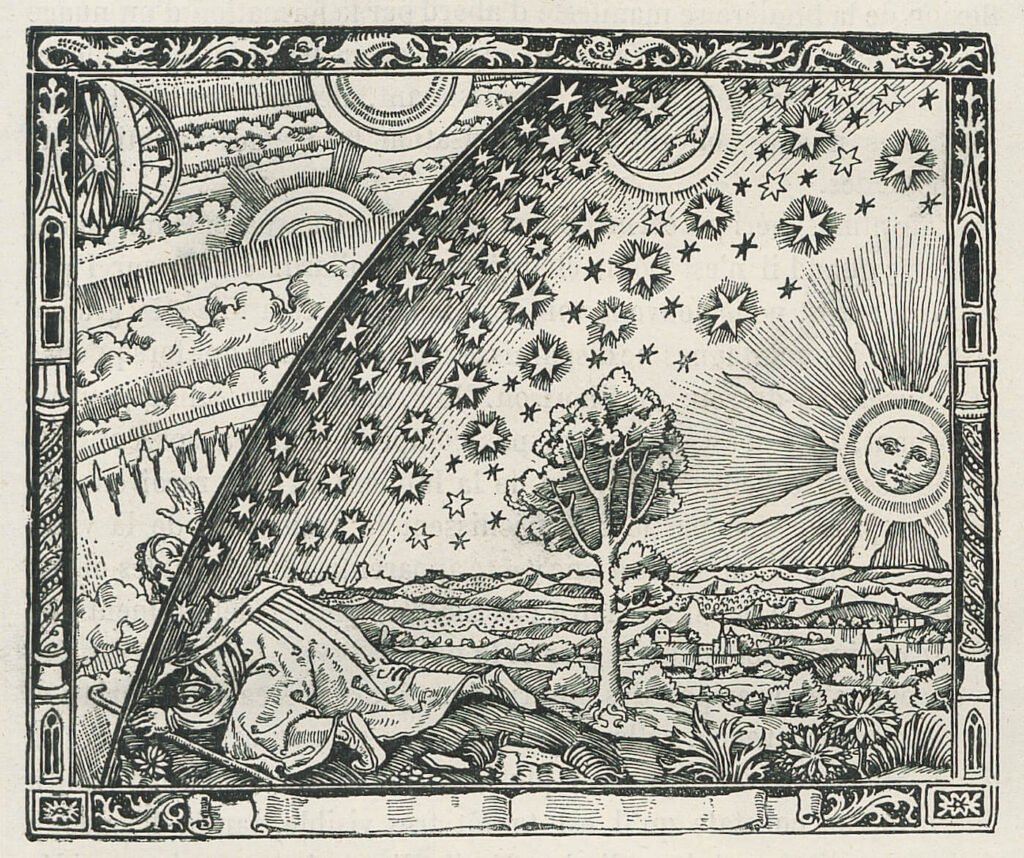
There’s something dishearteningly unsettling about a “secret” once everybody knows it.
The information itself hasn’t necessarily altered. It remains true. It remains useful. Even profound. Something else has happened however during the shift from private to public. Something has been lost. That something isn’t necessarily the “meaning”. It is the unique energy we experience when we feel we’ve traversed some sort of border to receive that information.
Forbidden knowledge has long provided much more than just the information. It has provided a new location.
To know what has been hidden is to occupy a space that others don’t. To find out what was concealed is to envision the world with two surfaces: one that is presented to all, and one under that surface that is visible only to those who learn how to see.
Rarely does the promise simply say you will know more. The promise usually says:
Once you know this, you won’t be like everyone else.
This promise has existed for thousands of years.
It is also very vibrant today.
Texts once accessible only because of their geographical location; text written in languages many people could never understand; texts restricted due to the authority of religion; texts requiring an individual to enter into a structured initiation process; texts simply not able to be accessed due to their rarity can now be easily viewed on a browser in less than a second.
Grimoires have been digitalized. Correspondences previously known only to esoteric practitioners are now cataloged online. Techniques used by astrologers that were once available only to those who had access to a teacher and/or rare booklets are now widely distributed throughout social media.
I believe we have more access to formerly obscure knowledge than any other generation.
Yet, the language of secrecy is ubiquitous.
Apparently, even if the gates are gone, we retain a strong attachment to the idea of passing through them.
The First Forbidden Knowledge
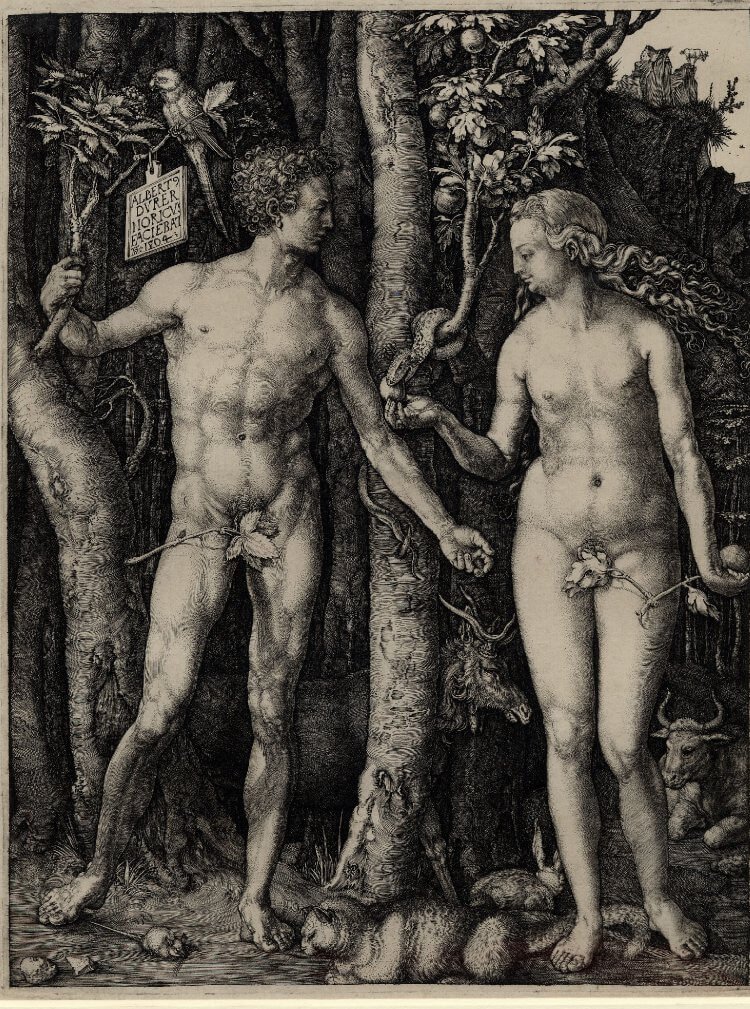
Knowledge was put at odds with taboo in one of the earliest narratives in Western culture.
In Genesis, the tree in the center of Eden isn’t hidden. Adam & Eve know exactly where it’s located. The people are informed about what the tree is; and, most importantly, they’re specifically forbidden from eating its fruit. Therefore, what makes its fruit appealing isn’t secrecy as typically understood. Prohibited knowledge precedes the appeal of its fruits.
The Serpent offers a very telling statement:
“Your eyes shall be opened.”
The allure of the serpent’s offer isn’t solely the acquisition of additional information regarding the world. When you consume it your being (person) will undergo a transformation. This is why knowledge holds out the promise of a transformation: you’ll be like God, knowledgeable of both good and evil.
This creates a repeated theme that occurs throughout various tales of forbidden knowledge.
Not only is the danger present in what is known, but also in what potential transformations occuring within the individual knowing.
When Prometheus steals fire; when Faust desires knowledge that transcends the scope of normal scholarly pursuits; and when occult legend after legend describe books that can be read without harm, contemporary horror continuously illustrates the same structure: There are things better left unknown; images best unseen; names best unspoken; and doors whose presence is safe so long as we don’t know how to open them.
The fantasy exists on two planes.
We fear knowledge because it may lead to our transformation into something else.
We want it for the exact same reason.
Ordinarily, knowledge accumulates. Forbidden knowledge starts.
Curiosity asks: “What is there?”
Forbidden knowledge poses a similar inquiry but phrased differently:
“Who could I possibly become if I were to gain such knowledge?
Hidden, Forbidden, Esoteric
Before we go further there are several things to distinguish.
Hidden knowledge is not always forbidden knowledge and forbidden knowledge is not always esoteric.
Information may be hidden because it has been lost, forgotten; it has yet to be translated; it is inaccessible; or it was intentionally withheld from you.
Forbidden knowledge occurs whenever an authority, community, institution, or tradition sets a boundary around what constitutes forbidden knowledge; in other words, you should never attempt to read it; you should never practice it; you should never reveal it; you should never teach it; you should never know about it.
Esoteric knowledge is perhaps the most difficult to define.
Traditionally, it involves an “inner” meaning (or teachings), sometimes reserved for initiates; gradually transmitted over time; and/or encoded into symbolic language designed to be as obscure as possible.
However, the “secret,” in all cases does not have to be a body of knowledge hidden behind some locked door. There are many things which will continue to be unavailable to us until we possess the requisite knowledge, skills and experiences in order to access them.
There are many examples of this today. A mathematical formula can exist in public domain yet mean nothing to someone who lacks the prerequisite knowledge to decipher the formula. A religious document can exist in public domain yet require historical context to understand. One can copy a ritual gesture by gesture and still have no idea of the symbolic structures upon which they are based.
Thus, there exists two separate concepts here: access to knowledge, and the ability to comprehend knowledge.
I think this is a kinder way to look at various types of esoteric secrecy. Sometimes a boundary functions not so much to keep others from gaining knowledge, but rather to prevent others from extracting meaning from their own context.
To Know What You Really Are
This is where gnosis raises the stakes.
Gnosis can be seen as more than simply intellectual knowledge within the wide variety of religious movements that are now referred to collectively as Gnostic (the name for these religions being somewhat arbitrary). In many cases it represents a form of liberating knowledge of both divine nature and humanity’s origin.
Several of the Gnostic cosmologies describe the world we see with our eyes as an illusion, or at least completely misrepresenting its actual structure. Therefore humans need to awaken to the fact of what they truly are before they may be liberated from their present state of ignorance.
Thus, knowledge and salvation become intertwined.
The world that the vast majority of people experience is not the complete world. The individual most people identify themselves as is also not who they really are.
It would be easy to find similar structures in many later types of esotericism — sometimes even in places that do not express anything overtly religious:
Everyone else thinks the world works like this.
You have discovered how it really works.
The content changes.
The seduction remains.
And there is a danger hidden inside the idea of awakening.
The Privilege of Knowing
The systems in place to distinguish between those who possess the information (the knowledgeable) and those who do not (the uninformed), create a space for an epistemological hierarchy.
There are those who are awake and aware of how things really are and those who are unaware of the true nature of things. Those with knowledge are able to see through appearances to understand reality.
While this system of distinction can create some meaningful differences in expertise and experience, the issue arises when having knowledge confers upon you a superior identity as well.
Having knowledge is no longer just about being someone trying to figure out how the world works. It is now about recognizing the world’s hidden truths.
One possible explanation for why people find secret knowledge so compelling is that uncertainty is hard to live with. Secret knowledge offers us a solution to our uncertainty by providing a location from where we can view others’ uncertainty as if it were theirs. They don’t see, therefore they are confused. We see, therefore we aren’t confused.
The distinction created by this way of thinking is comforting. However, it is also dangerous. Once we start viewing ignorance as a characteristic of “those people”, then one of the primary reasons for seeking knowledge has been lost: discovering the boundaries of our own knowledge.
Why Hide Anything?
Alas, secrecy cannot simply be dismissed as a psychological method for creating elites.
Yet, there have always been concrete reasons to conceal information. Religious minorities protected teachings under persecution. Craftsmen and professional traditions guarded techniques that provided them with income and status. Initiation groups restricted material to members.
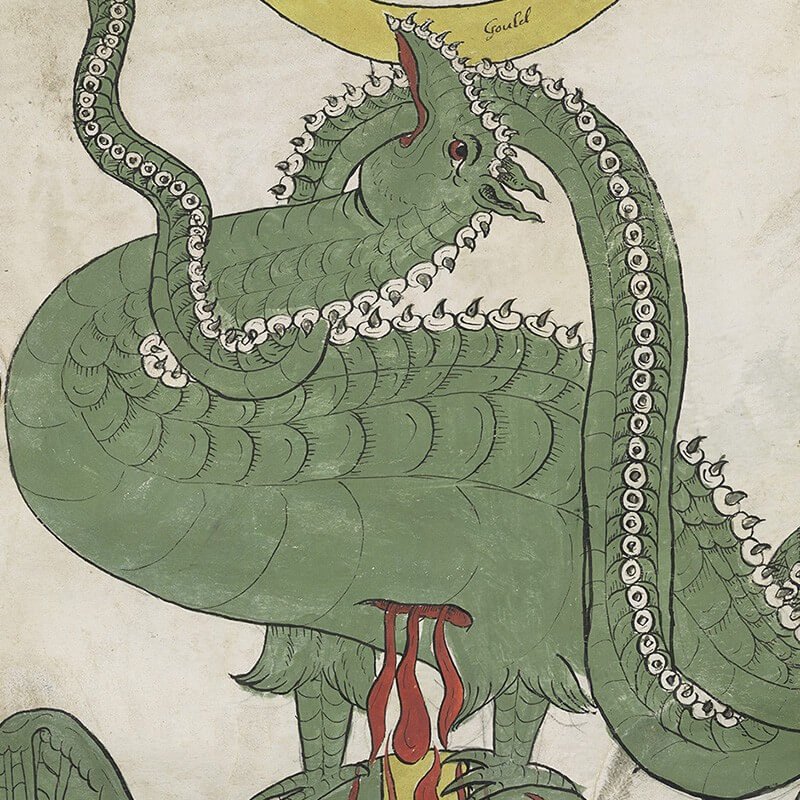
An alchemist provides an especially useful example.
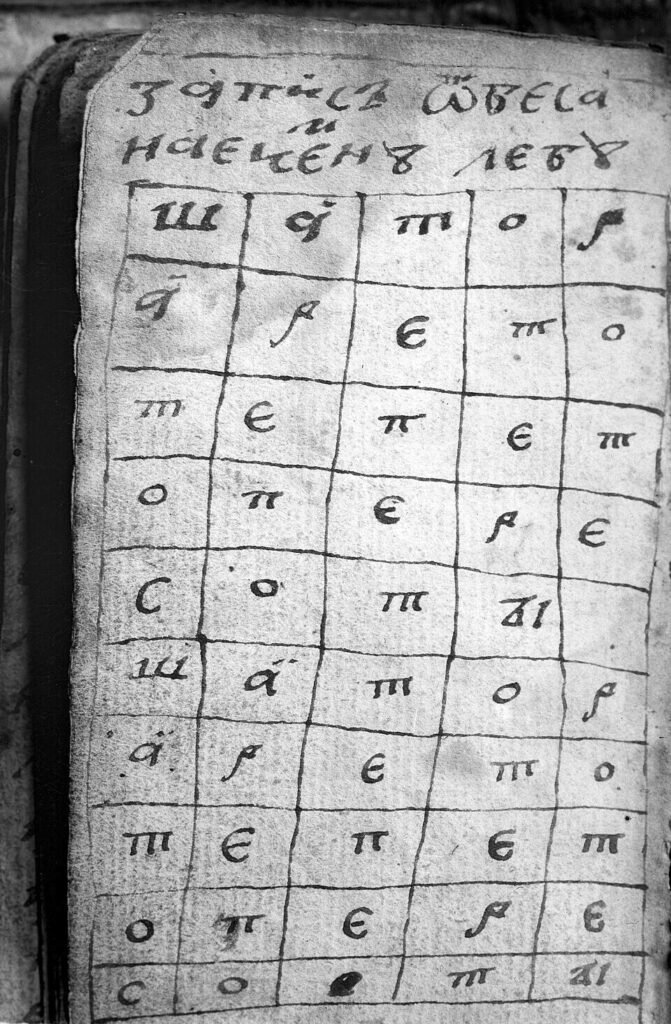
Many historical alchemical texts used many different methods to constrain or control the amount of knowledge available to readers (code names for substances, allegory, symbolic imagery, ciphers).
These were not always based on the same reasoning. Some authors presented their alchemical knowledge in such a way that certain types of disclosure should never take place indiscriminately or be placed in the hands of untrained people.
However, this is important because alchemy was never just a mystical language hiding spiritual truth. Alchemy was also experimental practice, artisanal practice, and material practice. Therefore, alchemy’s secrecy functioned across those worlds.
In our time, however, its strange language can easily look like a code waiting to be decoded.
But a symbol is not necessarily a cipher.
A cipher has a solution. After decoding it, one can replace what was hidden behind it by the information being concealed.
A symbol is less obedient.
The meaning may depend upon context, relationship, and analogy. It could possess several levels of meaning without collapsing into any single level.
The Initiatory Threshold
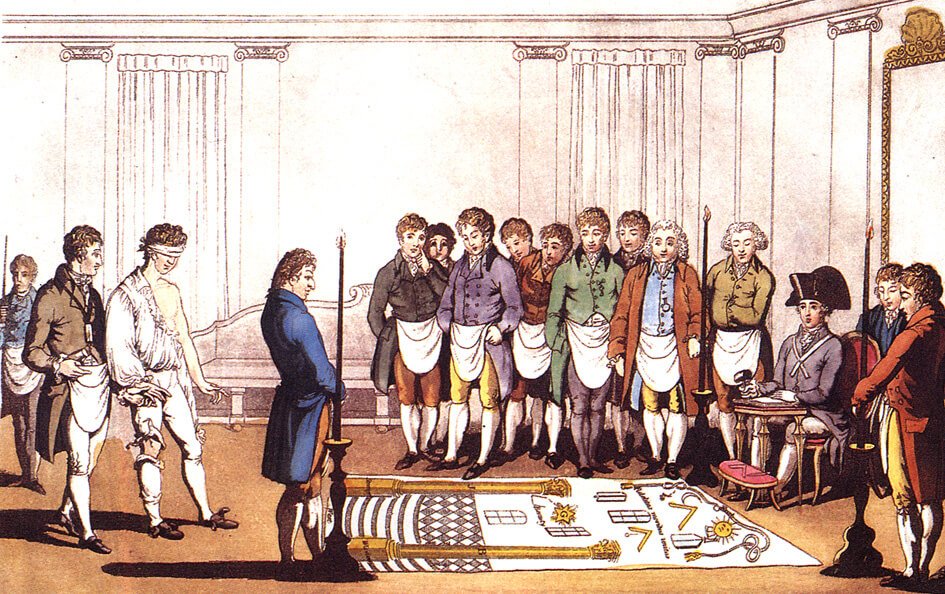
Initiation goes beyond merely providing knowledge.
It represents a transitional moment; it can be a rite of passage (ritual), an ordeal, an oath, a period of preparation, the passing on of teachings, or all of these at once.
Knowledge is contained in the event.
Someone can read the exact words from the speech given during an initiation ceremony without participating in the ceremony.
They might also recognize the gestures, symbols, and order of events.
In one way, almost everything is out in the open.
Yet, in another sense, the initiate and the reader may not have both experienced the same thing.
Accessibility does not equal active participation.
Digital culture has made this distinction important.
Databases, translations, archives, and digital access have disassembled the barriers to access to ideas and beliefs based upon wealth, institutional access, sex/gender, class, language, etc.
That’s an enourmous gain.
However, there is something odd about using information as the basis for measuring the acquisition of knowledge.
An experience becomes a document.
A practice becomes instructional materials.
Traditions become content.
Everything is accessible, but accessibility does not always equate to understanding.
We have never had such a vast collection of symbols before.
However, we are still trying to find ways to teach others how to live with them.
The Occult Without the Occultation
The word “occult” comes from the Latin word “occultus”: hidden, concealed, secret.
Therefore, there is something almost comical concerning the present-day Occult.
It is extremely easy to locate much of this information.
One can access the Corpus Hermeticum, Renaissance Planetary Magic, Ceremonial Magic, Astrology Manuals, Historical Grimoires, Digitized Manuscripts, and more, all from the comfort of their own home using nothing more than a computer and an Internet Connection.
As a result, the Occult has become incredibly visible.
This increased visibility creates a peculiar problem.
If some of the psychological value of esoteric knowledge is derived from the fact that it is secretive or hidden, what happens when the previously hidden becomes accessible via search engines?
Secrecy was still available to use but it had become part of how it was presented as a form of marketing strategy.
They attempted to conceal ancient knowledge.
The truth that historians are reluctant to reveal to you.
What your astrologer is unwilling to share with you.
The hidden meaning behind—
The design for this approach is easily adaptable since the actual body of knowledge is nearly irrelevant. What matters is the structural framework (or architectural) surrounding it.
There is something that is hidden.
Someone has hidden it.
Most individuals have no idea about it.
You will be one of them as soon as you begin learning.
The old initiatory process continues in miniature.
There is a before: you were unaware of something.
There is a revelation.
There is an after: you see things differently.
However, the new initiate experience only takes approximately 15 seconds and ends immediately with a commercial.
Manufactured Secrecy
This is how forbidden knowledge enters into commerce.
Value is created by scarcity. There is no difference in spiritual or esoteric marketplaces.
An instruction does not need to be helpful. It could be old.
It does not need to provide an explanation. It will reveal what was concealed.
When documentation showing suppression is unavailable; the story of suppression becomes part of the product.
Secrecy based upon actual concealment requires that access be denied. Secrecy manufactured as such requires an audience.
The secret must be discernible enough so everyone knows that there is a secret, yet exclusive enough so each individual believes they are distinguished from all those who do not know the secret.
Therefore, the commodity is not only knowledge. The commodity is the feeling of discovery.
That is probably why the promises remain viable even if the purportedly secret information is located at the top of a web page.
We are often purchasing the gate.
When Everything Becomes a Sign
In order to recognize a pattern there exists a certain joy in seeing things come together.
An assortment of seemingly unrelated facts now take shape and create coherence.
That which appeared accidental, has taken on significance.
Noise has turned into signal.
Interpretation (the process of finding an understanding), relies upon recognition of a pattern; however, so do numerous forms of esoteric practices.
Astrology represents movement in the Universe with occurrence or experience on Earth.
Tarot creates relationships among images and the resulting relationship gives rise to meaning.
Divination systems, while they operate under differing principles, all rely on the idea that randomness will reveal significance when viewed through the lens of a symbolic structure.
While looking for patterns does not represent anything illogical per se, the use of pattern recognition is fundamental to human thought.
Recognition of a pattern allows you to understand your world.
However, it can also cause a person to believe he/she has freed himself/herself from having to evaluate his/her interpretation.
One area where esoteric and conspiracy theories can appear similar but are different is their origin. Both begin by expressing dissatisfaction with the surface.
Both can ask if there is a greater context to seemingly unrelated events.
The most important consideration here is what occurs when the interpretation meets opposition.
Can it be incorrect?
Can evidence refute it?
Can there be multiple interpretations of the same subject?
Can there be ambiguity?
When an esoteric system becomes “epistemologically” unsafe is when it can accept any form of evidence (including its own failure) as validation.
If evidence confirms the theory then the theory is correct.
If evidence refutes the theory then the evidence was altered.
If evidence cannot be located, it merely demonstrates the successful concealment of truth.
At this point, esoteric knowledge has created a perfect fortress.
No other evidence can penetrate this fortress.
The Seduction of Being the One Who Knows
It’s easy to see why people would find manufactured certainty so appealing.
Life is complex and often resists explanation. Things don’t fall into nice stories as much as they should. In many cases, institutions are brought down by a combination of their own selfish interests, incompetence, happenstance history, and common human limitations. Sometimes contradictory truths exist at the same time.
There isn’t always an invisible hand pulling strings. There doesn’t need to be. There’s just complexity. That can be very hard to accept.
The appeal of manufactured explanations is that they restore order. They convert random events or accidents into deliberate actions and confusing situations into intentional designs. And perhaps most importantly:
You recognize them.
Now the satisfaction from being able to explain something isn’t merely because you were able to explain something. Now it’s because you’re one of the few who know the truth while everyone else remains unaware of your superiority.
In short, this is nothing less than the restored version of the old initiation process without the rituals and disciplines, but with all the intoxication of being set apart (that is – distinction).
This is ironic. Serious academic study generally has the effect of making subjects more complicated. Categories become muddled. Exceptions abound. Historical context complicates elegant theory. Sources dispute each other.
Thus, manufactured secret knowledge makes life easier.
Interpretation Is Not Revelation
The way you read or understand your cards differs depending on whether you look at them as having “privileged” (absolute) access to truth versus how you view them as being part of a “symbolic” (interpretive) system.
Privileged means the cards give you insight into something that would otherwise remain unknown.
Symbolic means the cards allow you to think about things you might never have thought about before. They help you see connections between events and ideas you may not have ever seen together before. Symbolic doesn’t mean the cards aren’t valuable; they’re very valuable. But, if your focus is on finding connections where there hadn’t been any before – you’re using the cards as an aid to your thinking.
Tarot readings show associations between things you might not have realized existed before. Tarot spreads create different ways to organize your thoughts. Astrological signs can create a language for describing feelings or situations that can be hard to put into words.
But none of these uses make the reader an all-knowing person. In fact, when you start treating symbols like machines that eliminate ambiguity, they become much less interesting.
Symbols are great because they can represent multiple interpretations. The Tower is not just an idea. Saturn is not just a diagnosis. A tarot spread is not a video feed from some control room.
When we use symbols, we’re creating an experience with the symbol, the context, and ourselves.
We need to remember that we’re interpreting; we need to recognize that our understanding of a symbol is always going to depend on who we are and where we are at the time of our reading.
If we lose sight of the reader, we’ll stop seeing our reading for what it is – an interpretation – and will start to treat it as if it’s the truth itself.
The Marketplace of Certainty
The reason for the popularity of certainty might be that uncertainty is hard to package.
“Here is one potential way of experiencing this as an individual” has both intellectual responsibility and commercial appeal.
“I’ll give you an inside look into what’s going on” however, has much better commercial appeal.
Thus, many in today’s spiritual marketplace offer people something old initiation systems offered after years of discipline: instant access to unknown truths.
Find your life’s purpose.
Discover who you really are.
Read the signs.
Know what other people think about you.
Understand what the universe wants from you.
Again, the promise isn’t just about understanding. It is about finding out what is true; and being sure of what you know. This isn’t unique to spirituality. Many political movements, wellness companies, financial advisers, self-help authors and online communities make some version of this promise.
What Remains Hidden
There are several ways in which a lack of “real” mysticism might lead people to doubt esotericism; but these methods all have their limits. If nothing else, they suggest that we need to take such ideas (and practices) more seriously than we do.
What I am talking about here is the difference between seeking out the unknown parts of reality because we recognize that there are things beyond the limits of our knowledge, as opposed to using the unknown as a way to illustrate that we understand better than everyone else.
One path starts with the idea of mystery. The other leads to the idea of superiority.
A mature esoteric practice probably needs to make the world more strange rather than less strange. That is, symbols should challenge our assumptions, or at least add complexity to them, and not simply be decorations for them. Study should show the cracks, fissures and contradictions of history.
Divination should sometimes present us with interpretations that we don’t want to accept. Finally, theology should sometimes reach a question that it can no longer answer.
If every time we encounter a mystery, it simply reaffirms our preconceptions about it, then little or nothing has really happened. Perhaps this is where the separation between mystery and secrets is most interesting. Secrets can be divulged.
Once I give you the code word, you now have what I had.
Mystery is different. Mystery is not simply some piece of information that was withheld from me. It is the part of reality that resists being fully comprehended through my possession of it.
We can certainly go near a mystery – we can interpret it, we can study it, we can experience it, we can create language systems to describe it – yet ultimately remain unable to contain it completely.
This is why I think many of our experiences with difficult knowledge are just the opposite of the fantasies upon which forbidden knowledge is based. We start out wanting to pass through the doorway. We picture that once we get past the door, we’ll find out everything. We expect that passage to separate those who have seen from those who haven’t.
But if we keep going long enough, we come across another doorway. On one side of that doorway lies not satisfaction at finally discovering what everyone else missed; on the other side lies recognition of how much more there is that is unseen.
The most enticing promise of forbidden knowledge has always been: You will know what others do not.
Perhaps the more difficult forms of knowledge ask of us: To learn how much we do not know – and to fight against transforming that uncertainty into another secret that we can pretend to own.