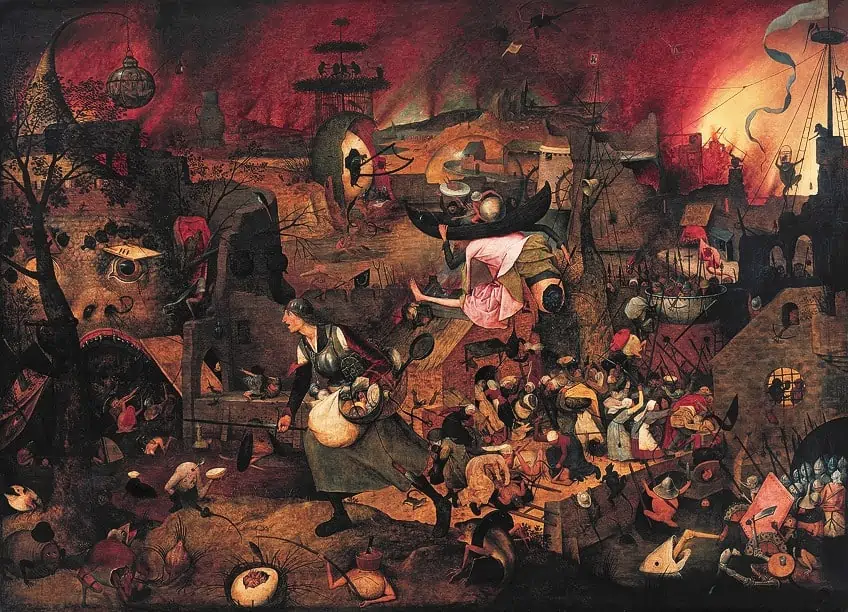
On certainty, the grief of losing belief, and the desire to feel held.
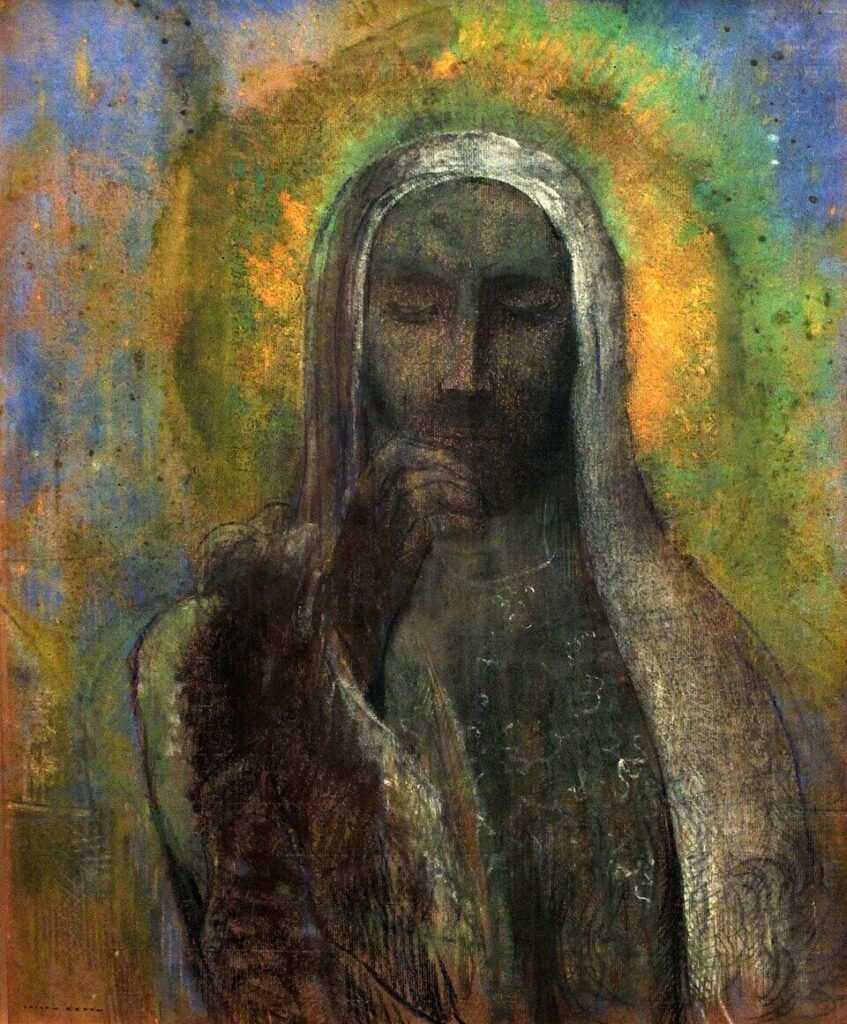
There is a familiar way of telling a story about religious doubt.
Someone loses certainty, passes through a difficult period, and eventually returns with a deeper understanding.
The crisis becomes meaningful in retrospect. Questions lead to insight. Silence becomes preparation. Faith emerges stronger.
This story can describe an actual experience. It can also become a condition imposed on anyone whose experience does not fit that narrative.
Doubt is permitted, provided it eventually proves that belief was right all along. Anger is tolerated, provided it softens into gratitude. A person may question God, but the final paragraph is expected to restore the relationship to an acceptable form.
What happens when that paragraph never arrives?
Perhaps part of the difficulty lies in how little attention we give to what doubt takes away.
We discuss whether a belief remains defensible, whether someone should continue to pray, whether their questions can be answered.
Meanwhile, the person may be losing the world in which those questions once had a place.
What Certainty Was Holding Together
Religious certainty can concern much more than confidence that particular statements are true.
It can give a life a sense of continuity: someone knows us, our existence matters, suffering is seen, and death does not have the final authority over everything we love.
Even when belief offers no explanation for a particular event, it may sustain the feeling that an explanation exists.
We do not understand, but someone does. We cannot see where our lives are going, but they are going somewhere.
This can make uncertainty difficult to confine to an intellectual problem. A person may still know all the arguments they once found persuasive and yet no longer feel that their life is held within the reality those arguments describe.
The distinction matters.
Doubting God’s existence, doubting God’s goodness, and losing the felt assurance of God’s presence are different experiences. They can overlap, but an answer to one may leave another untouched.
An argument for God’s existence cannot necessarily restore the feeling of being heard. Repeating that God is good may deepen the difficulty for someone whose question concerns what goodness means in the face of what happened.
When certainty disappears, the person may have to reconsider both what they believe and how they will live without something they had come to rely on.
Religious Doubt and the Grief of Losing Belief

Caspar David Friedrich, The Abbey in the Oakwood, 1809–1810. Oil on canvas. Alte Nationalgalerie, Berlin. Public domain; reproduction via Wikimedia Commons
We have familiar language for mourning someone who has died. The loss of belief can be harder to name.
What has been lost may be a presence that once felt intimate, the possibility of speaking without having to explain oneself, or the conviction that loneliness was never absolute.
A person may miss God while remaining unsure whether God was ever there.
Such grief can be difficult to articulate. To someone who believes, it may sound like a crisis waiting to be corrected. To someone who does not, it may seem strange to mourn what they regard as an illusion.
Neither response necessarily makes room for the experience itself.
There can also be grief for the person one used to be. The person who could pray without monitoring whether prayer felt real. Who could hear a familiar passage and receive it as a promise. Who knew what to do with fear, even when the fear remained.
Returning to a church, a ritual, or an old prayer may briefly bring that person close again. The familiarity can be comforting and painful at once. We recognise the words and remember how we inhabited them.
But saying them now reveals the distance.
Relief may accompany this loss. Someone can be glad to have escaped fear, coercion, or an account of God they found unbearable, while still grieving parts of the religious life they have left. Relief does not erase attachment, and attachment does not settle whether returning would be possible or desirable.
The Desire to Be Protected
Looking at faith psychologically raises an uncomfortable question: what did we need belief to do for us?
It may have helped us bear uncertainty, imagine a future beyond our present circumstances, or trust that injustice would not remain unanswered forever.
It may have offered the possibility that someone could love us without the limitations that make human love so precarious.
There is no reason to treat these needs with contempt. Wanting comfort does not make a person intellectually unserious. Wanting to be loved does not make every experience of love suspect.
Nor does identifying the emotional function of a belief settle whether it is true. A conviction can be consoling and true, or frightening and false.
Psychological interpretation can help us understand our investment in it without resolving the question of its object.
Still, the investment matters.
A person may never have believed that faith would prevent illness, loss, or injustice. Yet they may have trusted that, within those experiences, they would not be abandoned. The protection they hoped for was the possibility of enduring suffering in someone’s presence.
When that presence becomes uncertain, familiar assurances can begin to sound like descriptions of a security they no longer possess.
Some expectations may have been held quietly, without ever being examined. Others may have been explicitly encouraged by people the believer trusted.
Questioning them can therefore involve both self-examination and a reckoning with what one was taught to expect.
It is possible to discover how deeply we needed an assurance without concluding that the need was foolish, or that its loss should be easy to bear.
Prayer After the Loss of Assurance

Vilhelm Hammershøi, Interior. From The Great Hall of Lindegården, 1909. Oil on canvas. Ordrupgaard, Denmark. Public domain artwork; image: The Vilhelm Hammershøi Digital Archive
Unanswered prayer is often described as a lesson in patience. The answer is coming. The timing is different. The request has been answered in a way the person does not yet recognise.
These interpretations may comfort someone who finds them credible. They become harder to defend when presented as certain knowledge about another person’s experience.
From inside the silence, the distinction between an answer delayed and no answer at all may be impossible to establish.
The loss reaches beyond the particular request.
Someone may have asked for help and found themselves questioning the relationship in which asking once made sense. Prayer had allowed them to bring fear somewhere. Now even that movement feels uncertain.
Continuing to pray may carry several meanings at once: hope, habit, longing, anger, an unwillingness to surrender something that mattered. The person may not be able to separate them.
That uncertainty need not immediately become evidence of either faithfulness or self-deception. They may be trying to understand an experience whose meaning has changed while its importance remains.
Psalm 88 gives this difficulty a stark expression. The speaker calls out to God, describes affliction and isolation, and asks why God rejects them and hides his face. The prayer ends with darkness as the speaker’s only friend. There is no final turn to thanksgiving.
One way to read its place in scripture is as room for a prayer that cannot yet offer reassurance. Its existence does not tell us what will happen to the person praying it. It allows us to hear what they are saying now.
Speaking to a God We Cannot Trust
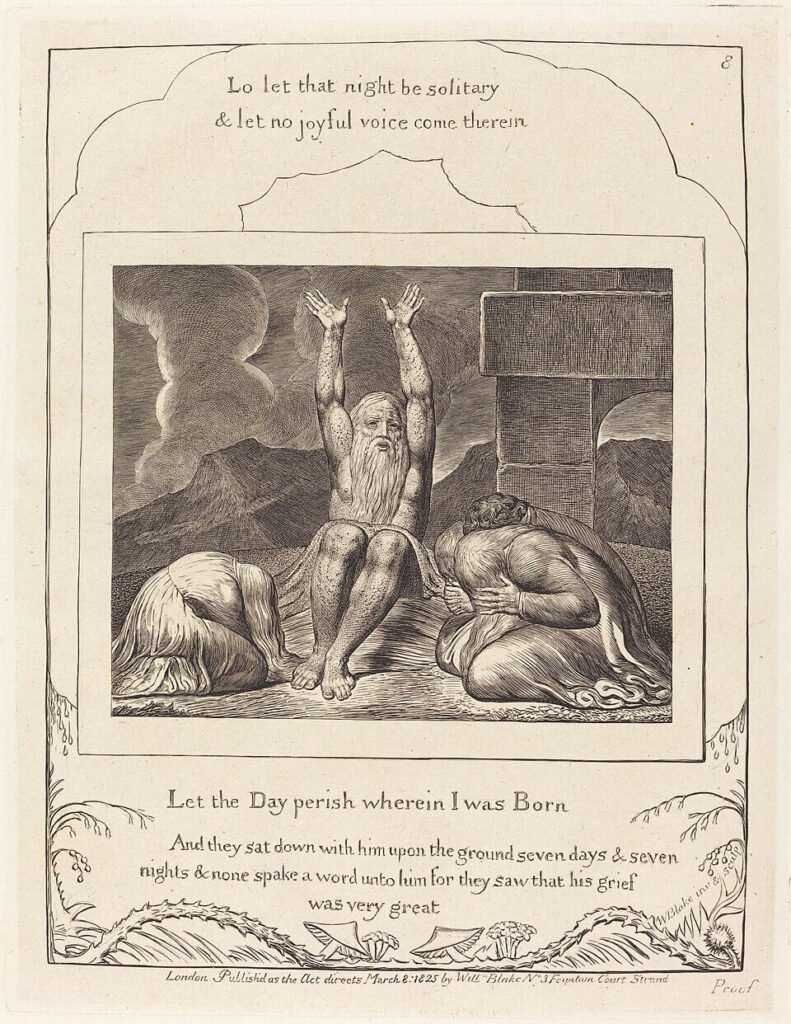
William Blake, Job’s Despair, from Illustrations of the Book of Job, 1825–1826. Engraving. The Metropolitan Museum of Art, New York. Public domain
Grief can include anger towards what has been lost.
In religious doubt, that anger may be directed towards God, towards a religious community, or towards the self who trusted.
A believer may feel betrayed while recognising that they cannot fully explain what promise has been broken.
Was it something they were taught?
Something they assumed?
Something they still believe a good God should have done?
Examining these questions can be necessary. It does not make the anger disappear on demand.
In Job 7, Job addresses God directly, complains of being watched, and asks why he has been made a target. His protest gives the relationship a form that is difficult to reconcile with the expectation that prayer should always express acceptance.
Protest can arise because the language of divine love has become painful to use. A person may still desire the God they cannot currently trust. They may want an answer from the very presence whose silence they are protesting.
This does not make anger proof of a deeper faith. It describes a possible conflict within someone who has not ceased to care.
Nor can every protest be resolved by saying that the person has simply outgrown an inadequate image of God. Sometimes their question remains directed towards God as the one they believed could have intervened. They understand the proposed explanation and still cannot accept it.
Calling this a relationship leaves a difficult question open: can disagreement remain within it for longer than others find comfortable?
A Life Without the Expected Ending
The familiar account of spiritual growth would give this loss a purpose. The old certainty needed to collapse. The believer needed to learn a less possessive trust. What disappeared was making room for a more mature faith.
For some people, that account becomes meaningful. Others cannot honestly tell it.
They may regain belief without recovering their former assurance. They may continue religious practices while leaving important questions open. They may cease to believe and still miss what belief made possible.
These outcomes do not have to be arranged into a hierarchy in which the person who returns has understood the experience correctly and everyone else remains unfinished.
There is also no obligation to make uncertainty admirable. Doubt can be exhausting. Someone may long for the uncomplicated confidence they once possessed. Wanting it back does not mean they can recover it by deciding to do so.
Perhaps the immediate task is modest: to acknowledge what certainty provided, what its loss has cost, and which words can still be spoken honestly. This may include a request for comfort. It may include protest. It may include silence.
A person can recognise the limits of their understanding without experiencing those limits as peace. They can continue to address God while holding a complaint they cannot withdraw.
There may eventually be consolation. There may be a change in belief, or a different understanding of what happened. There is no need to turn these possibilities into assurances.
For now, the prayer may end with: Why?
The person does not have to add another sentence.