Solitude, Contemplation, and the Search for Meaning in Modern Life
The way we now view and engage solitude has become two distinct and opposing realities.
On one hand, solitude has become the ultimate goal. Cabin in the woods? No problem. Desolate island? Easy. Three days hiking in nature without having to speak? Simple. Digital detoxes are growing industries. Silent meditation retreats are becoming increasingly popular. People are paying money to get away from their hectic lifestyles and spend time by themselves.
However, once we find solitude (if we ever truly do), we can’t stay in it. As soon as possible, we grab for our phone. We put music on in places where music should normally not exist. We take photos instead of focusing. We often share details about our solitary experiences with others before we even experience them ourselves.
Regardless of how quiet and peaceful a location appears, all too many people can create sufficient internal distractions to negate total silence.
As I sat on an isolated island camping, I was reminded of this paradoxical desire for and inability to remain in solitude. While the day presented plenty of opportunities for activity, the evening hours made the island a significantly different place – or rather, I perceived the island differently than earlier in the day.
Perhaps the differences weren’t just based on my physical surroundings. Perhaps they existed within myself.
Many ideas that had previously been dormant in my mind suddenly flooded forward. Conversations that I believed were concluded long ago returned. Many questions that had previously appeared unimportant suddenly commanded my attention.
For a period, I thought possibly that my immediate surroundings contributed to this sudden resurgence of mental processes. However, now I am starting to believe that the location did not greatly impact what occurred.
Solitude does not inherently produce benefits; mountains, deserts, caves, islands, etc., are not inherently therapeutic.
The purpose of this essay is to explore why humans frequently seek solitude – however, upon finding it, why they are unable to maintain it for any length of time.
In addition to philosophy and psychology, I believe aspects of both theology and politics reveal multiple dimensions of the human experience of solitude and contemplation.
Solitude Is Not the Same as Loneliness
One of the greatest benefits of Lars Svendsen’s book on A Philosophy of Loneliness is that he reminds readers that loneliness and solitude are not synonymous.
While both words are used to describe states of being alone, they represent very different kinds of experiences. The distinction may seem trivial once you’ve seen it, but modern society continues to confuse the two concepts.
Lonely means having a lack of meaningful connections. This sense of disconnection is not confined solely to the physical act of being away from people; it can occur just as easily when people surround us.
On the other hand, solitude refers to a voluntary or intended removal from the distractions we’ve learned to call “social”. In doing so, solitude allows for alternative types of attention and connection to develop.
As soon as we recognize the difference between the two, everything changes.
If solitude is merely another term for loneliness, then it’s clear we should take steps to either reduce or eradicate all solitary time.
However, if we understand solitude as a specific type of human experience – with potentialities as well as risks – then things get much more complex.
What becomes possible in solitude?
This is a question that few members of the modern world appear to want to ask.
Rather than assuming that the optimal existence will include uninterrupted social engagement, the model citizen or mentally healthy individual is depicted as engaged in social activities, producing, responding, available, and responsible.
Productivity is measured based on social interactions: How many followers do I have? How many conversations am I in? How many messages do I send and/or receive? How many group activities fill my schedule?
Even what was traditionally viewed as leisure time now appears to be being publicly displayed. Moments of enjoyment are photographed as they happen and distributed before those moments can be stored within memory.
Therefore, spending time alone begins to appear questionable.
Because someone consistently chooses solitude, it seems logical to ask if there might be something wrong. Are they isolated? Are they depressed? Are they social anxiety-ridden? Have they withdrawn due to inability to perform their social obligations?
These concerns are valid. Being isolated can result in significant emotional trauma. Humans are naturally relational beings; therefore, if we don’t maintain some form of relationship(s), we suffer.
However, acknowledging the detrimental effects of loneliness does not necessitate dismissing the positive aspects of solitude.
Conversely, ignoring this historical pattern would involve ignoring numerous individuals who produced influential philosophical, religious, literary, psychoanalytic, and artistic works by withdrawing (at times for extended durations) from everyday social interactions:
Socrates often lost himself in contemplation and thus remained absent for extended lengths of time.
The desert fathers/mothers removed themselves from society.
Benedict created a monastic system centered on prayer, quiet reflection, labor, and communal living.
Montaigne retired to his library.
Nietzsche took long walks through the mountains.
Virginia Woolf stressed that women needed “a room of one’s own.”
Thomas Merton lived as a monk.
Each of these thinkers experienced vastly differing reasons for removing themselves from societal norms so they cannot be compared in terms of reason for withdrawal, however, each acknowledged that constant involvement in the social world can obstruct other forms of creative expression such as: thought, prayer, writing, observation/observation of nature and/or listening.
Therefore, the key issue is not whether humans require interaction with other humans. We do.
The more important question is:
Can humans still perceive their own thoughts when every moment contains external stimuli from which they must constantly remove themselves?
Hannah Arendt and the Forgotten Art of Thinking
The distinction between isolation, loneliness, and solitude are important to understand regarding Hannah Arendt’s political philosophy, yet these three concepts may lead us to ask an almost ordinary question:
How do we actually think?
Arendt made an important distinction in her work The Origins of Totalitarianism between loneliness and isolation. Isolation refers to how we relate to the public and political world; a person can be politically or socially isolated (i.e., unable to participate in collective processes) while maintaining close relationships with others.
Loneliness is far more extreme than social isolation; loneliness results in the disconnection of a person from their world, not just other humans.
Solitude is different from both.
Arendt continued to develop her views on thinking as an internal conversation between two persons of one (the “two-in-one”) in her book The Life of the Mind.
Thinking is not merely generating a continuous internal monolog. Rather, it involves questioning yourself, answering yourself, disagreeing with yourself, examining your own beliefs before taking action based on those beliefs.
In this view, solitude is not the absence of a relationship. Instead, it represents a unique type of relationship. When every moment of silence has been replaced with voices coming at us from the outside, it is clear why thinking would be so much more difficult to achieve.
There is something decidedly modern to this realization. We have always assumed that consuming enough information will inevitably generate thought. We believe that consuming multiple sources (books, articles, podcasts, documentaries, etc.), listening to many forms of commentaries, and having many discussions will ultimately create an accumulation of knowledge which will result in greater understanding.
However, there is a difference between accumulating information and producing thought. Thought requires interruption.
For example, in order for information to become reflection and then turn into judgment, there needs to be enough time/space for these transitions to occur. If there are no interruptions from our constant flow of information we run the risk of substituting thought with an endless series of reactions.
The Inner Wilderness
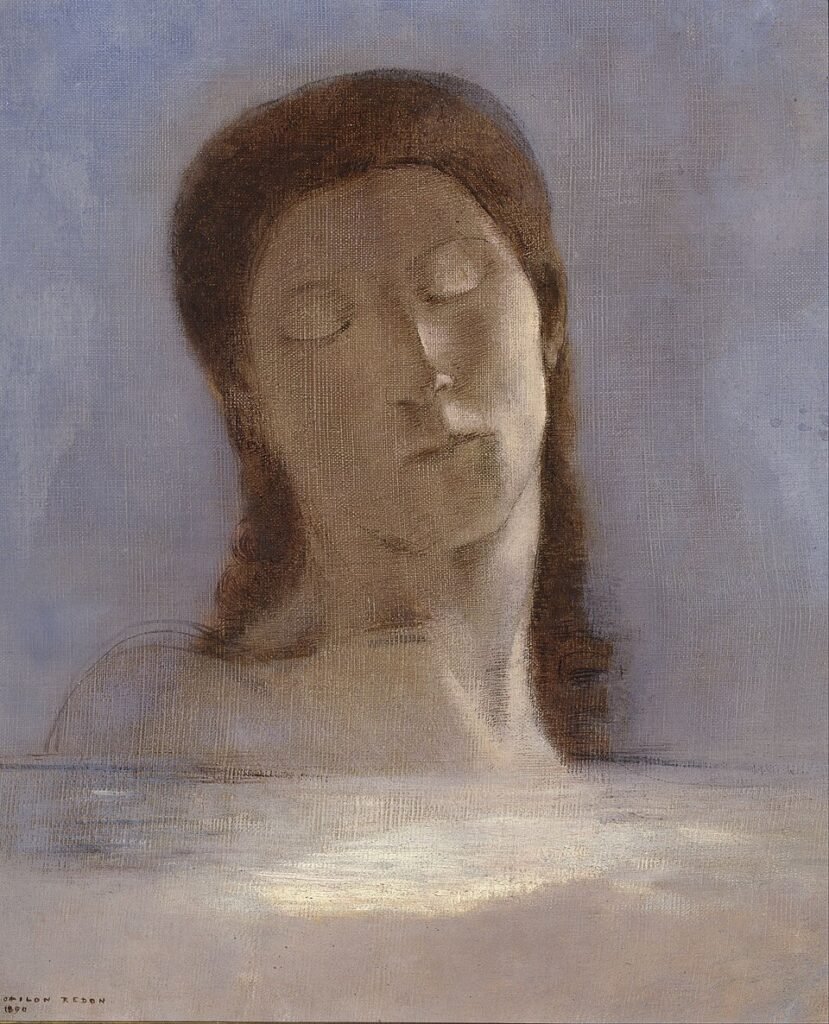
If Arendt shows us why we need solitude to think, Carl Gustav Jung can show us why we will still want to avoid it.
A main point of Jung’s work on psychology has been the extent to which humans remain largely oblivious to themselves. While many of our mental processes occur outside of conscious awareness, most of our time and energy is focused outwardly at the world around us.
In the meantime, we learn how to see other people quite well, yet we remain surprisingly ignorant of our own motivations.
When this ignorance is coupled with what Jung called “projection”, then this lack of familiarity with ourselves can become particularly clear.
Projection is more than just misjudging another person. Projection is the unconscious assignment of qualities or characteristics (such as thoughts, feelings, or behaviors) of yourself to another person or object outside of you. Characteristics such as fear, shame, conflict, desire or even quality of character that are hard to accept as being your own may become very apparent when you attribute them to someone else.
You criticize,
you idolize,
you condemn,
and sometimes you become so interested in the person you are reacting to that you can realize more about yourself than about the person in front of you.
The issue isn’t that people project. A little bit of projecting is probably unavoidable.
The problem is generally that we don’t realize when it is occurring.
Solitude can play an important part in psychological development because although solitude doesn’t guarantee greater self-acknowledgment, it does remove some of the distractions that can make ignoring self-awareness easier.
Once those distractions are gone, a new type of dialogue starts.
This time – with yourself.
Some individuals experience extended periods of solitude as producing anxiety or unease. For some, perhaps part of their uneasiness results from the fact that prolonged solitude forces the questions that daily living makes possible to never ask to come to mind:
Who am I when I’m not playing a certain role?
What remains when my productivity, reputation and/or other peoples’ expectations are temporarily removed?
What do I keep wanting to deny knowledge of?
Jung referred to this growing level of self-awareness as psychological maturity through the idea of “individuation”. Individuation refers to a lifetime process by which previously unconscious or isolated parts of the psyche develop an increased recognition and integration.
Individuation suggests becoming familiar enough with yourself to engage in genuine relationships with others without constantly seeking the other person to bear the burdens that you refuse to acknowledge within yourself.
The Wilderness Is Not an Escape
Transformation is frequently located outside everyday reality and therefore, there could be a reason why transformation has such a strong presence in many religious, as well as mythological traditions.
In every case, major events take place in areas with little significance at first glance. The examples include deserts; forests; mountains; caves; islands. While these areas can be thought of as merely the backdrop for the real happenings in each story (the journey), the repeated use of the same locations in different stories across time and geography strongly implies a deeper symbolism.
A second commonality in all of these accounts is that leaving behind normalcy always precedes change/transformation.
Abraham departs on a journey to an unknown destination from his home. Moses meets God while fleeing into the desert and later returns to ascend Mt. Sinai. Jesus spends 40 days in the desert prior to the start of his public ministry. The exact pattern is duplicated in non-biblical traditions.
Prior to attaining enlightenment beneath the Bodhi Tree, Siddhartha Gautama abandoned the protection provided by the royal palace. According to Islamic tradition, Muhammad went to the Cave of Hira numerous times to contemplate before he received his first revelations.
Learning to Listen
The experience of the Desert Fathers and Mothers represents an example of what withdrawal means to Christians.
Men and women began leaving their homes and settled community to live in the deserts of Egypt, Palestine and Syria for prayer and ascetic practices from the third through the fourth century. Some lived as hermits, while others formed early monastic communities.
It is possible to assume that they were escaping a corrupt society to find individual holiness.
However, the writings of the early Christian fathers indicate a much more complex situation than that.
The desert was not peaceful by virtue of being empty.
When individuals removed themselves from the common distractions of everyday living, the conflicts remained.
Many of the accounts of conflict in the early monastic literature include those with anger, envy, pride, fear, despair, lust, judgment, and restlessness. Within this tradition, particularly in the writings of Evagrius Ponticus, considerable attention was given to logismoi — troubling or tempting patterns of thought that could gradually shape perception and ultimately influence action.
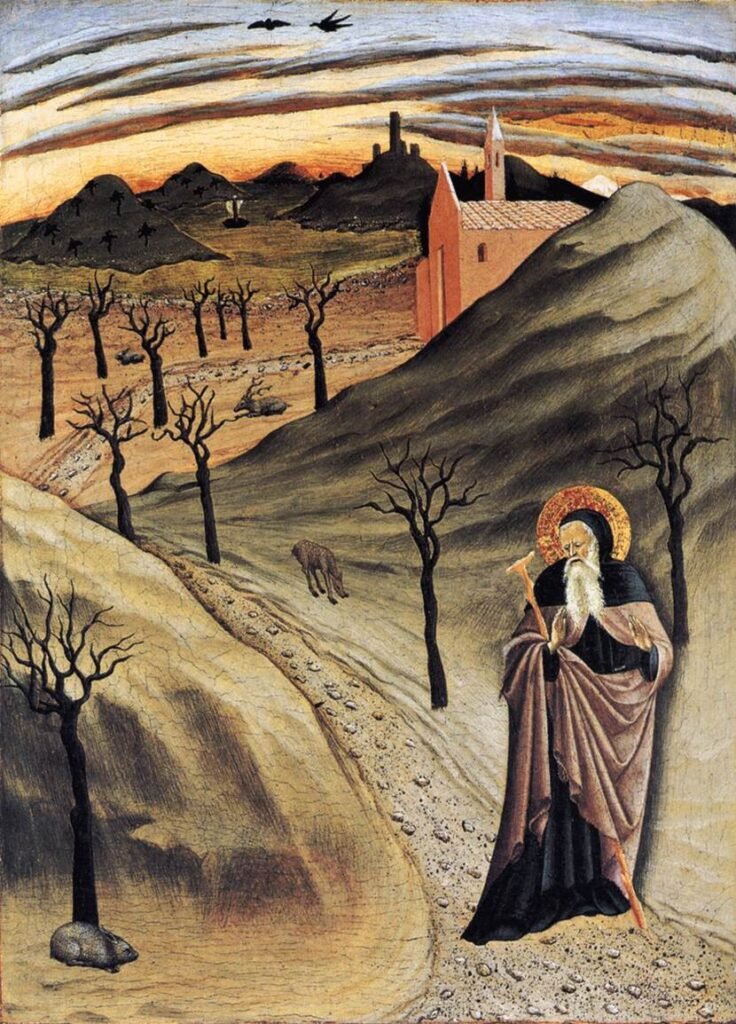
The wilderness did not cause these thoughts to cease; rather, it increased their difficulty of avoidance.
In some way, this may represent one of the most lasting contributions to our understanding of how humans interact with nature and solitude from the desert tradition – it is generally easier to move oneself physically to another location than to improve one’s mental attentiveness.
One can take himself/herself out of the city yet bring all of the sounds of the city along with him/her.
Additionally, I believe that is also where modern culture misperceives solitude.
Solitude Cannot Be Romanticised
But solitude shouldn’t be romanticized either.
There are kinds of loneliness that will really harm you.
There are individuals for which silence isn’t a choice; it’s something that is being done to them.
There are individuals that have experienced abandonment, exclusion, displacement, etc., that have lost meaningful connections in their lives.
Therefore, any philosophy or theology that addresses solitude without accounting for those realties can become naive.
Furthermore, any type of spirituality that supports detachment while rejecting the relational necessities of humanity can become disassociated from everyday human experience.
This is why the separation of solitude from loneliness is important.
An individual could stay completely by themselves all day on a Friday through Sunday and still never feel lonely.
However, another could be standing amongst thousands of people and feel profoundly lonely.
Maybe solitude is not best defined as the absence of friendship.
Rather, maybe solitude is best viewed as cultivating some sort of awareness.
Withdrawal Is Only Half the Journey
There are several examples of someone returning to a place after being absent.
Moses comes down from Mount Sinai. The Buddha leaves the Bodhi tree. Jesus returns from the wilderness. Even some of the Desert Fathers and Mothers who were known for withdrawing from the world and living in private spiritual lives were also seen by many as spiritual leaders. People would travel long distances to seek out their wisdom.
Therefore, while some may view withdrawal as abandoning the world, others may find it a means to see it differently.
Thomas Merton had a strong understanding of this dichotomy. While he lived most of his adult life as a Trappist monk and was always searching for greater degrees of solitude within the monastery walls, he believed that contemplation was not a form of detachment from history. He wrote extensively on topics related to war, racism, violence, technology, nuclear arms and the societal crises facing the modern world.
In Thomas Merton’s opinion, the value of a contemplative lifestyle lies in its ability to strip away enough illusions so that one cannot avoid reality. Throughout his writing career, he continually cautioned against the dangers of unreality; the process of creating an image of oneself, of another individual , group of individuals, or of the world, and then believing that the created image is what truly exists.
This position directly opposes the widely held notion regarding contemplation.
Contemplation does not exist to allow us to achieve profound spiritual experiences.
It is to be able to observe yourself, other people, and the world around you without projecting upon those things your own fears, ambitions, desires or ideologies.
Can we remain present to what is there and still decide what it should represent?
When contemplation is viewed as a method for perceiving reality as opposed to escaping reality, solitude ceases to stand in contradiction to interaction with the external world. In fact, solitude can serve as a prerequisite for interacting with the external world in a manner which is honest.
Against the Romanticism of Escape
At this point one may naturally inquire if this represents merely another form of idealizing the act of withdrawing from the world?
Historically, there is a multitude of examples that provide a reason to doubt it.
Individuals withdrew themselves from society solely as a result of their indifference to it.
In many cases spirituality has been utilized to serve as an alibi for individuals who wish to avoid social/political responsibilities.
Many philosophers contemplate humanity’s existence; yet they remain extremely removed from the suffering of actual human beings.
The criticism is accurate. Not all withdrawals are transformations. Nor is all silence contemplative. An individual may sit in complete silence for weeks and still be completely absorbed in his/her/their feelings such as anger, hatred, arrogance, and self-centeredness.
Residing on an island or living within a monastery do not automatically render one wise.
This is the precise reason why whether an individual withdraws oneself from the world cannot be based upon the intensity of the experiences which occur while he/she/they are experiencing said withdrawal.
The real issue is what occurs after withdrawal.
Has solitude enhanced your compassion toward others? Have you acquired a greater ability to recognize truth? Has it instilled in you a sense of your limitations in recognizing reality? Has it rendered you humble? Does the inherent dignity of another human being present itself with more ease due to solitude?
If none of these have occurred, then it would seem that little was accomplished via the silence experienced during withdrawal.
Attention as an Ethical Practice
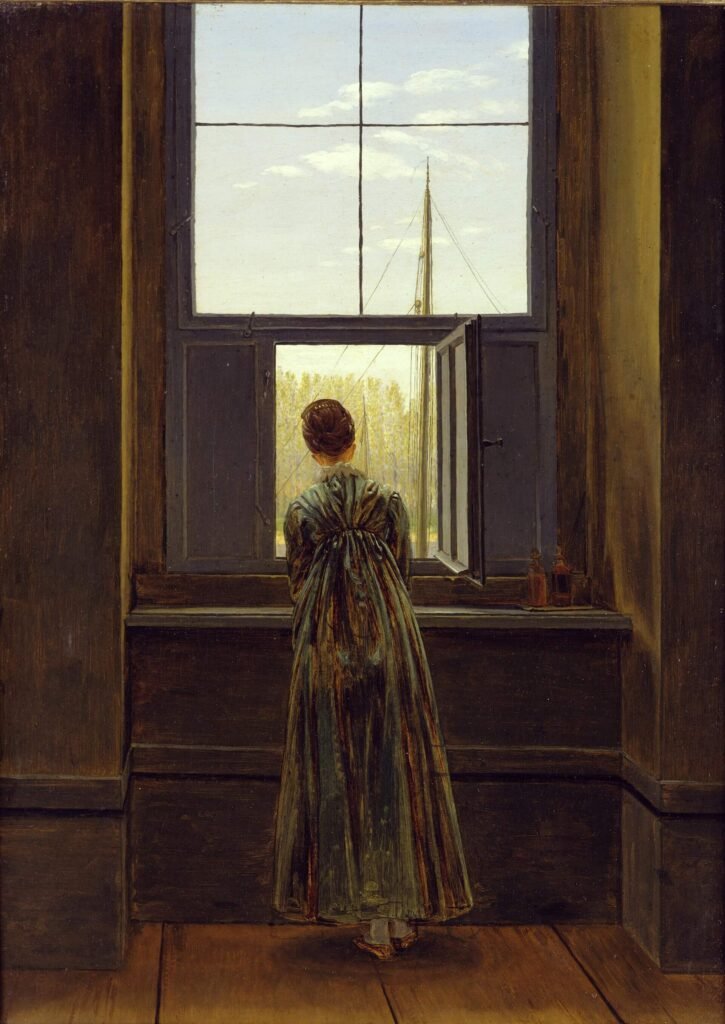
This leads us to the word which has run beneath all the ideas mentioned up to this point:
Attention.
In both the philosophical and spiritual aspects of Simone Weil‘s work, she placed attention at a very high level. The highest forms of attention are, as she sees it, forms of prayer. Prayer, seen in this way, is the self-impatience being suspended for just long enough to receive what is actually in front of you.
The term does extend beyond explicit religious terms, attention is much more than simply concentrating on something.
Attending to something (whether another person, or the world) is attending to reality.
When you attend to another person, you are actively resisting the impulse to reduce them to some type of object, category, problem, etc., as well as your own fear(s), desire(s). When you attend to the world around you, you are allowing something to be presented to you before you decide exactly what that thing means.
Thusly defined, contemplation is not necessarily passive. It is a form of disciplined receptiveness.
That is likely why silence can be important.
Silence may not possess magical powers; however, silence provides a space in which we can attempt to focus our attention without interruptions that fragment each moment into many small pieces. And while the previous statement represents a purely psychological viewpoint regarding our ability to develop genuine attention within such an environment, it also represents an ethical standpoint.
How we attend to others will determine how we experience them. The manner in which we experience others will ultimately determine how capable we are of loving them. And our capacity for loving them will inevitably shape the quality of world we help create.
When Noise Becomes the Default
One of the most noticeable aspects of modern life isn’t just the volume of information we are exposed to today, but how uneasy we’ve become with those spaces where there is no information.
Waiting now involves scrolling.
Walking means listening.
Traveling now equates to consuming.
All too often even the time that would appear to have been a natural fit for reflection comes pre-occupied with content including; podcasts, playlists, notifications, messages and curated streams of content.
These aren’t inherently bad things.
Rather than focusing on if any or all of these are detrimental to you personally, the question is:
Do we still have the capacity to choose silence?
This distinction is important to make.
Listening to music on your walk through the woods is fundamentally different than needing to listen to music in order to walk through the woods.
Looking at your phone isn’t the issue.
The issue is, can you stop looking at it?
Byung-Chul Han has pointed out in many instances that modern forms of power are quite different from older ones that were mostly based on either prohibitions and/or external discipline. In modern times, the subject actively collaborates with their own exploitation and exhaustion by participating in systems that measure, capture, circulate and monetize their own attention.
We reveal ourselves voluntarily.
We allow ourselves to be continuously available.
We turn our own attention into a commodity that can be bought, sold, circulated and profited from.
Therein lies a strange paradox for how we think about freedom.
We generally conceptualise ourselves as free because nobody is directly telling us to stay connected.
Nobody tells us to look at what’s going on.
Nobody directs us to scroll through what’s happening.
Nobody physically keeps us from turning everything off and giving ourselves a break.
But this makes freedom hard to identify when we find it so difficult to imagine living without constant access to each other (and therefore, each other’s devices).
This might also explain why silence seems so unusual today.
Silence not only disrupts an individual’s habits, it disrupts an entire economic structure.
Contemplation as Resistance
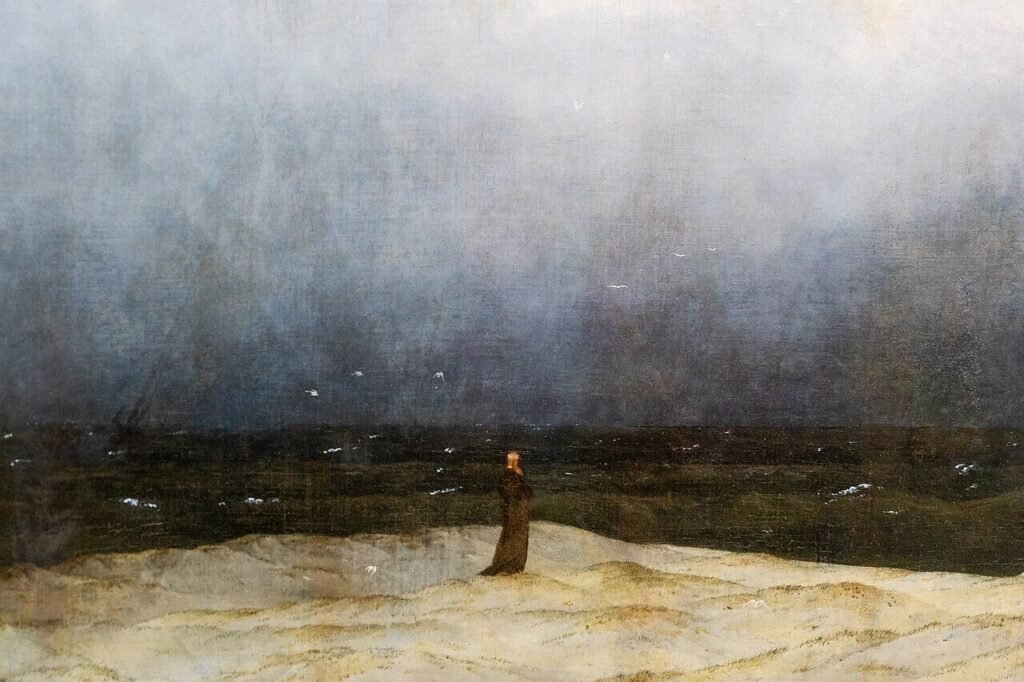
At first sight, quietly contemplating or simply being present by the sea could seem utterly disconnected from what we commonly think of as “political”.
In what way does simply being at peace with the ocean help create justice in society?
The nature of this question shows us just how limited we are when it comes to understanding what “politics” means. If all politics relates to government, elections, parties, and institutions; then meditation (contemplating) falls under something else entirely. However, if the scope of politics includes the world humans coexist in – a focus that permeates much of Hannah Arendt’s thinking on politics – then there exists an indelible connection between the quality of one’s attention and one’s ability to participate in, and thereby engage in, politics.
You will not be able to protect a world which you have stopped noticing.
You will not be able to respond to someone else’s pain if you have educated yourself to ignore it.
Therefore, contemplation does not necessarily exist in opposition to action. Contemplation serves to prepare one’s mind for perception. Without perception, actions can quickly become reactions. Without reflection, conviction can develop into dogma. And without silence, outrage can also serve as yet another source of noise.
This is not meant to imply that contemplation always results in wisdom. History provides ample example of individuals who were both deeply religious, philosophically oriented, and contemplative but nevertheless failed to recognize injustice. Similarly, while activism has no inherent guarantees of justice, unreflective action may recreate some or many of the same forms of dominance which activists seek to challenge.
For these reasons, the relationship between contemplation and action must be seen as complementary rather than hierarchical. One is not inherently better or higher than the other. They require one another. Action limits contemplation from becoming self-indulgent. Contemplation limits action from becoming unquestioned reaction. Each brings out the inadequacies in the other.
Learning to See
Paulo Freire’s concept of conscientização (critical consciousness) may appear to have little in common with contemplative practices.
However, the relationship between these two concepts will come into focus when we consider that education – like Freire understood education – is more than just acquiring knowledge.
Education transforms how people perceive their world.
As a result of learning they start to recognize patterns or systems that were once viewed as “natural”.
They start to see who holds the power.
They start to realize the function of language.
They see that there are forms of oppression.
Eventually they will come to realize that what seemed inevitable in the past, could be created; and therefore can potentially be transformed.
In addition to developing a greater understanding of the world, contemplative practices may provide an even more personal experience of this disruption.
Not through the study of political theories; but rather through the breaking down of a person’s sense of normalcy.
One of the greatest impediments to seeing injustice is often not ignorance but familiarity.
Familiarity with the world creates such a routine that we fail to ask why the world took on its current shape.
We mistake stability for necessity.
We adopt certain assumptions and over time forget those assumptions exist.
A silence that provides a limited space between us and the narratives through which we normally understand the world around us, can sometimes make a significant enough difference in creating awareness of a bias; questioning of an ideology; noticing of whose voice has been silenced; etc.
There is perhaps another reason that contemplative practices are considered a quiet danger. It is not simply due to the potential for disengagement, but for undermining certainty.
Returning to the World
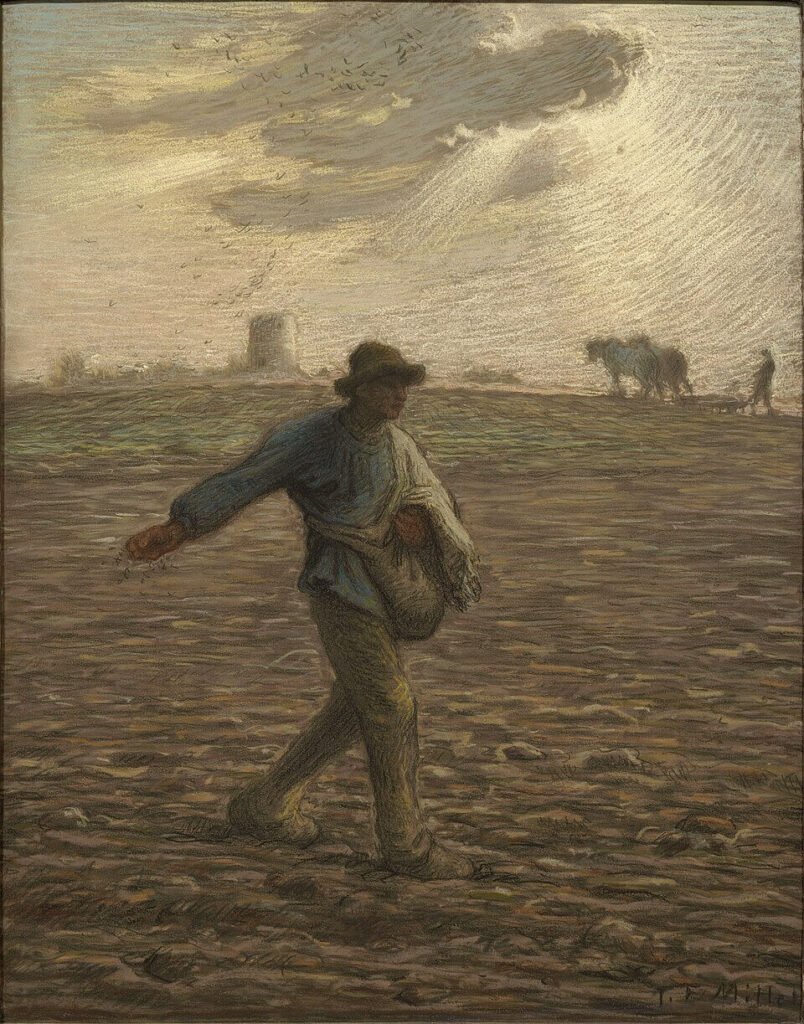
Gutiérrez’s point is that the experience of God must not be separated from the encounter with one’s neighbour and therefore that contemplation cannot be reduced to a private spirituality in which love and justice are two separate movements of human life. This again changes the meaning of solitude.
The purpose of silence is not to disengage from history but to return to history capable of seeing it more truthfully.
The prophets returned. The disciples returned. The mystics returned.
Whether someone will emerge from silence with an altered perspective; whether they will love differently; whether they will have learned to notice suffering more clearly than before; or if they simply will have become interested in themselves.
Contemplation which ends with itself has misunderstood itself. Its movement is always outward again.
Returning
The time I spent on the island ended.
The seas remained as they had always been; the pine trees continued to lean into the wind; the narrow trails, disappearing into the brushwood, as if unconcerned by whether or not people would use them tomorrow.
The island did not reveal anything to me. It did not give me any spiritual experiences. No clarity came to me regarding my life. I questioned nothing. In fact, I left with more un-answered questions than when I arrived.
However, I felt a difference in myself upon leaving. Not due to anything having changed in the physical environment. But rather due to some new way I began to pay attention. It is easy to think that silence will answer all of our deepest questions. Perhaps it provides something else – perhaps what it provides best is the opportunity for us to stay with our questions long enough for them to take on significance.
Modern society encourages little of this type of patience. Questions quickly turn into opinion statements. Uncertainty is seen as a lack of conviction. Thinking is viewed as hesitation. There is increasing pressure to respond sooner than there is interest in understanding. This may help explain why solitude often seems so unfamiliar today. Solitude disrupts a lifestyle that prioritizes instant response over extended thought.
Yet, throughout all of the traditions we have studied, the same motion occurs repeatedly. Not a permanent residency in the wilderness, but the return.
That’s possibly why solitude should never become an identity. Nor an aesthetic. Nor a privilege reserved for those able to retreat into their own private forest at will. Its goal has never been to flee. Its goal has always been awareness.
Awareness of self.
Awareness of others.
Awareness of the world.
Awareness of reality prior to interpretation by habit, ideology, fear or desire.
For these reasons, contemplative practice should not be confused with irresponsibility. Rather, contemplative practice is the disciplined patient process of developing perception.
Only through this process can action be more than a reaction to stimuli.
Only through this process can justice be more than certainties.
Only through this process can freedom be more than the ability to select among distractions.
Gustavo Gutiérrez may have been correct in stating that contemplative practice and action belong together. And perhaps Hannah Arendt was correct in suggesting that authentic thinking depends on being able to engage in that peculiar dialogue with oneself. These ideas are not mutually exclusive. One relates to beginnings. The other relates to what follows after those beginnings.
In between lie the quiet processes involved in creating an individual capable of experiencing the world differently.
The older I grow, the less I believe that retreat holds any special wisdom, but it strips away enough noise for another conversation to begin. The one we spend most of our lives postponing. Perhaps this explains why silence continues to beckon us despite our continuous avoidance of it.
Silence does not promise peace, but rather asks for something much more taxing. Silence demands that we attend to things.
Perhaps attending to things has always represented the initial step in both contemplative and social justice.
And possibly love.